
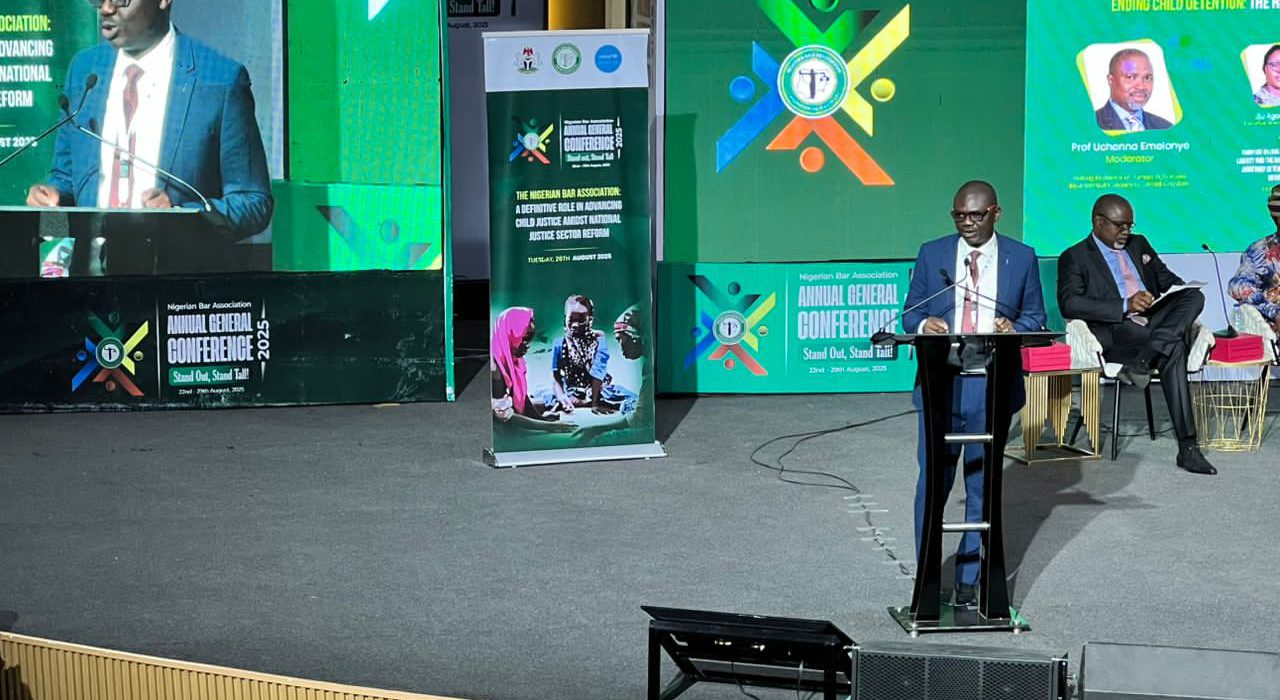
By James Ibor
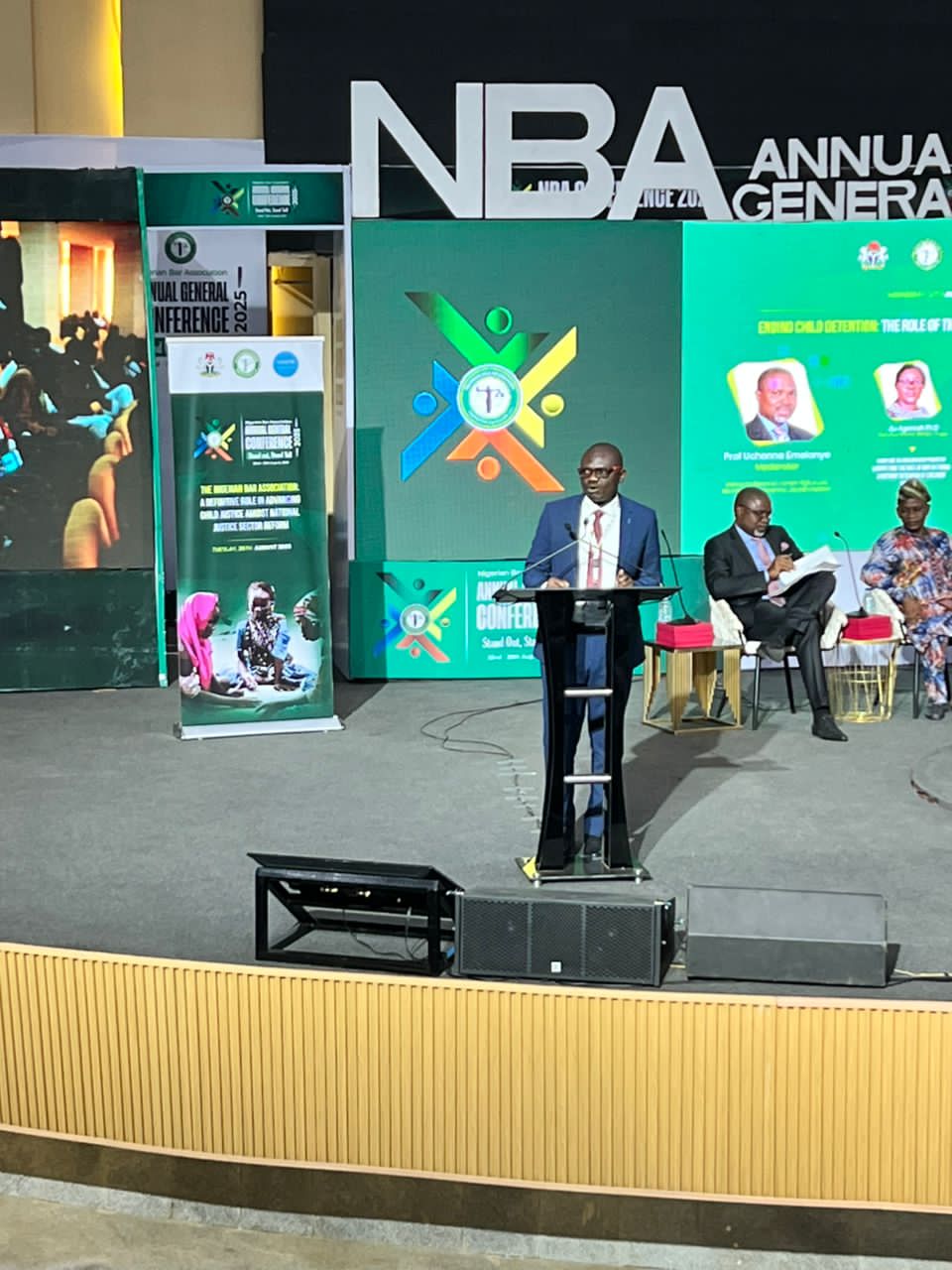
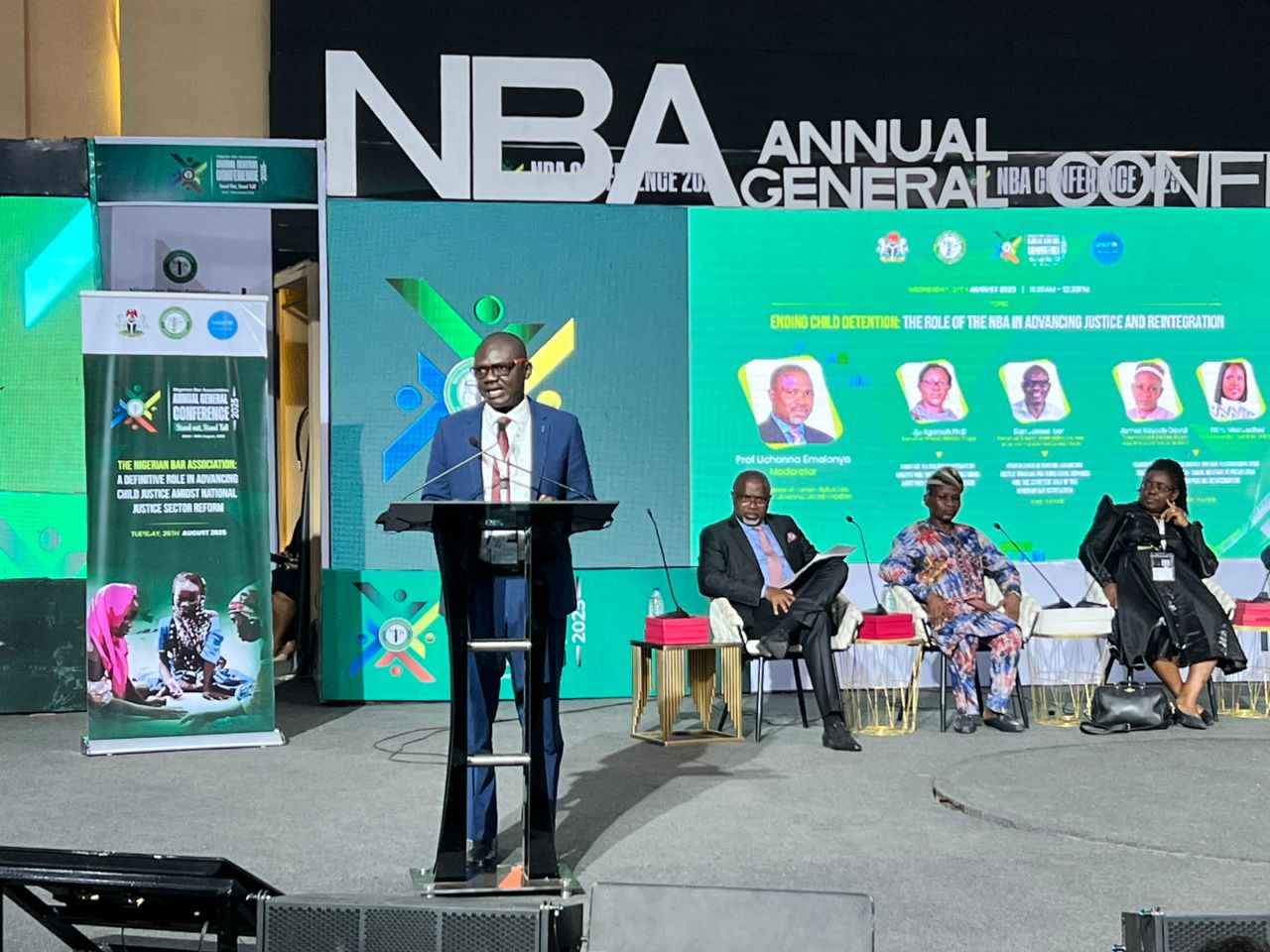
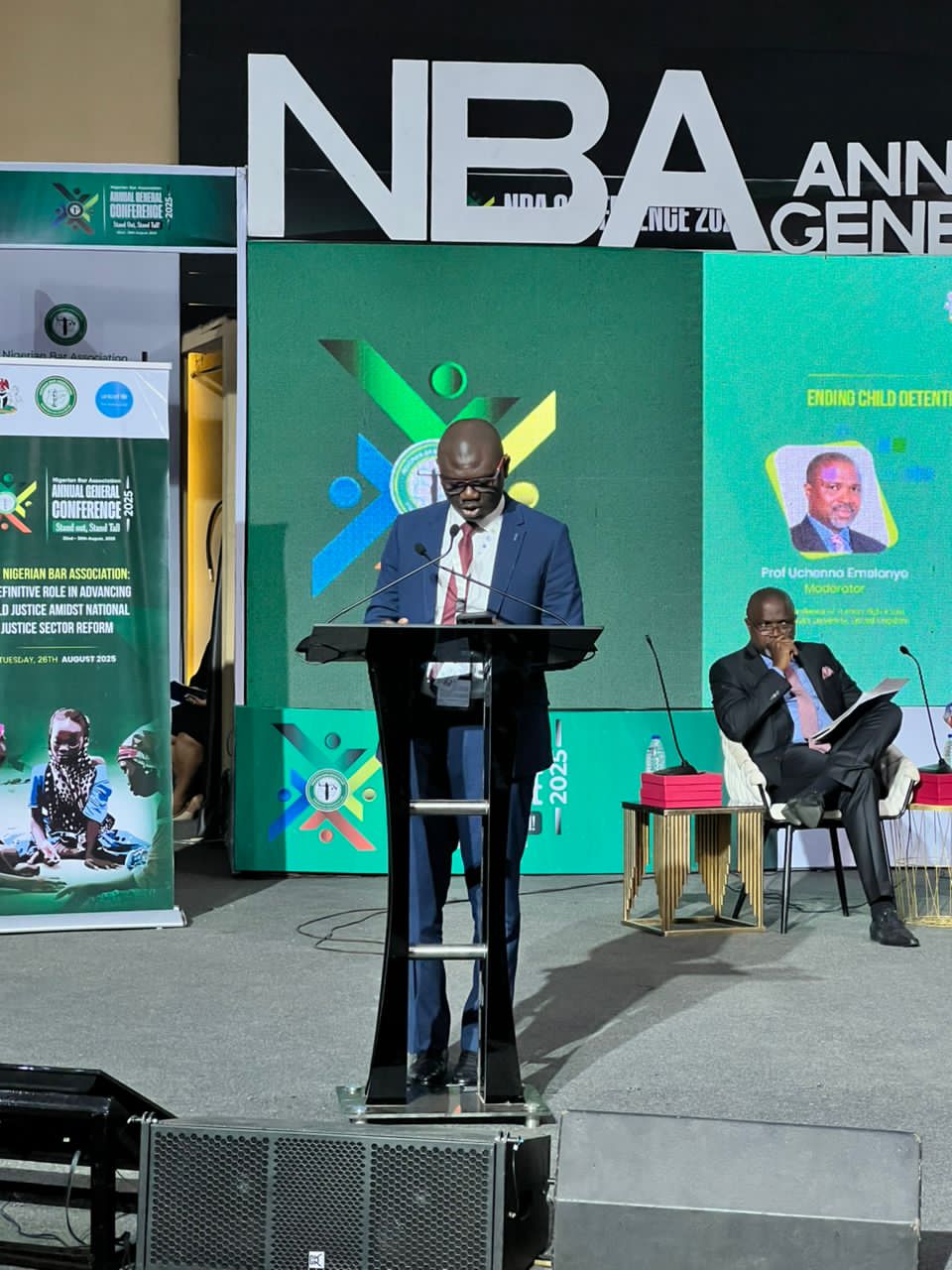
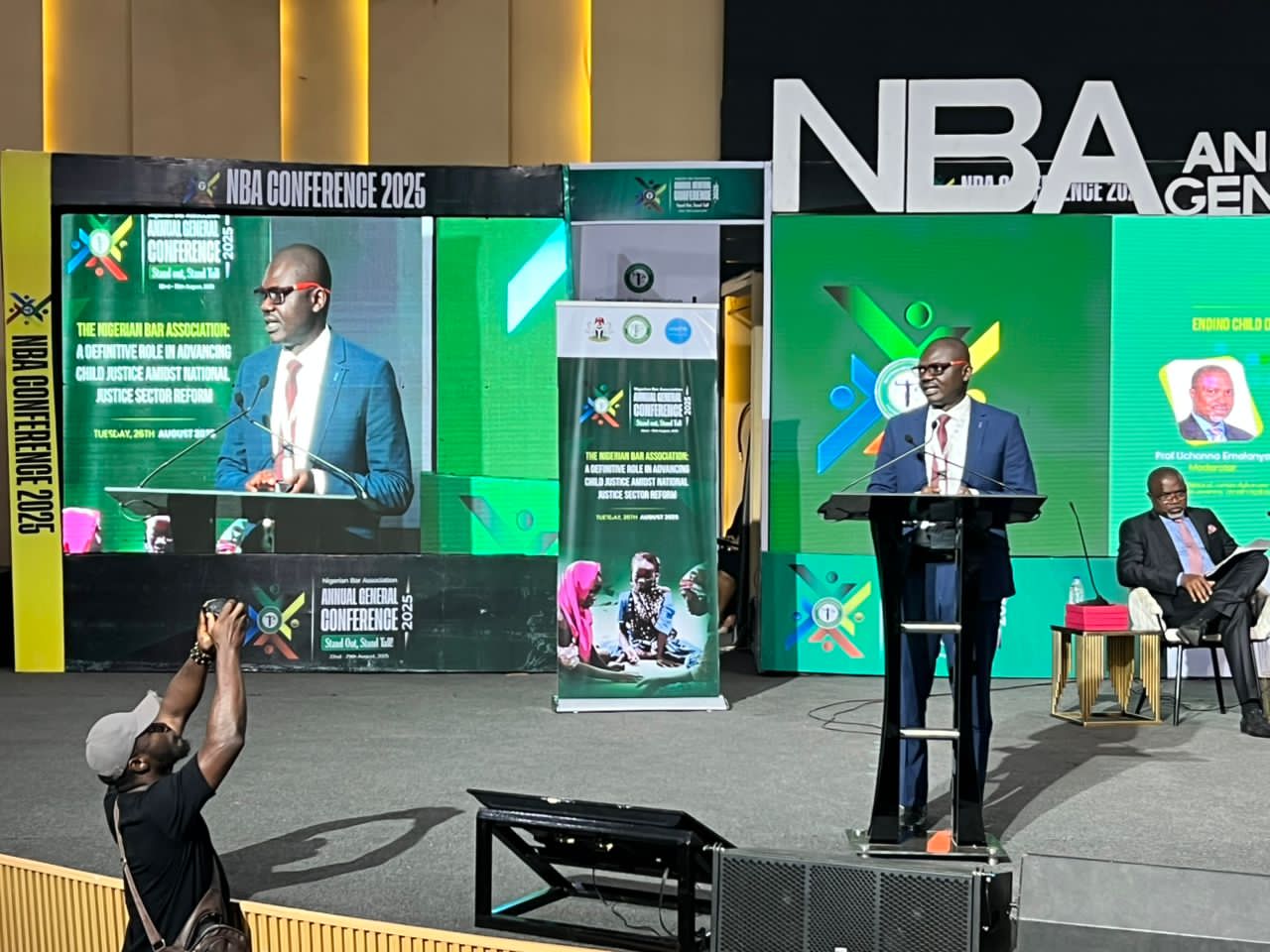
Being a text of a paper presented on Wednesday, August 27th 2025 at the Main Hall of the International Conference Center, Enugu, South East Nigeria, venue of the 67th Annual General Conference of the Nigerian Bar Association with the theme, “Ending Child Detention: The Role Of The NBA In Advancing Justice And Reintegration.”
The detention of children remains one of the dehumanization challenges within Nigeria’s criminal justice system. Child detention in Nigeria is both widespread and systemic and will require more than government efforts to end it.
The Nigerian Bar Association is a witness to the most urgent human rights challenges of our time: the systematic and arbitrary detention of children in the administration of justice for minor offenses in Nigeria. Children who should be learning are in detention, some with hardened adult criminals.
Today, we explore how legal professionals can transform from mere witnesses to this crisis to architects of well-designed plans to address and ultimately eliminate the arbitrary detention of children in Nigeria.
The Goals
The goals are to –
a. create consciousness and increase awareness among lawyers about the rights of children in conflict with the law;
b. inspire discussions and the development of tools that could foster collaboration between the NBA and other criminal justice stakeholders;
c. develop information and educational materials and design a framework that can enhance the full implementation of the Child Rights Act and other relevant laws at the National and State levels, especially on Child Justice Administration;
d. develop a system that guarantees transparency and holds law enforcement agents accountable to the NBA for their actions or inaction; and
e. strengthen National Child Rights Implementation Committee, State Child Rights Implementation Committees and the Local Child Rights Implementation Committees as established by the Child Rights Act, 2003 and the respective Child Rights Laws of the States.
Recent Data On Children In Detention Facilities
According to a report of the Federal Ministry of Interior published in 2024, over 133,906 children and young adults were in custody in Nigeria between 2020 and 2024, with 92% held in adult detention facilities. The report, which stated that most of these children were awaiting trial, noted that 68% of them lack access to legal representation and about 64% experienced trial delays due to missing case files. Many of the alleged offenses were non-compoundable.
Nigerian Legal Framework Against Arbitrary Detention of Children in Conflict with the Law
Before we look more closely at the data above, it is important to review some of the legal and policy frameworks that protect children from arbitrary detention in Nigeria.
Nigeria is a signatory to and bound by several international and regional instruments, which they have ratified. These legal instruments are;
a. The UN Convention on the Rights of the Child (CRC), 1989, ratified in 1991; and
b. The African Charter on the Rights and Welfare of the Child (ACRWC), 1999, ratified in July 2001.
Nationally, the Nigerian 1999 constitution, specifically Sections 34 and 35, guarantees the fundamental rights of Nigerians, such as the rights to dignity and personal liberty. The Nigerian Child Rights Act, 2003, broadens these safeguards by expressly providing for diversion as an alternative to custodial measures. These alternatives are provided for at sections 204 to 212 of the Child Rights Act (CRA). The Violence Against Persons (Prohibition) Act, 2015 also provides safeguards and reinforces child protection mechanisms.
Definition Of Key Operational Words
Section 277 of the CRA defines a child as “a person under the age of eighteen years.” For this paper, child detention refers to any form of arrest or imprisonment of a child in a custodial facility that restricts their freedom of movement. Section 1 of the Child Rights Act lays down the guiding principle in the implementation of the Child Rights Law when it provides that the best interest of the child shall be the paramount consideration.
The international, regional and national legal safeguards notwithstanding, the report of the Federal Ministry of Interior reveals that most children in custody still lack access to legal representation. Disturbingly, this occurs in states where government actors—such as the National Human Rights Commission, the Legal Aid Council of Nigeria, Citizens’ Rights Departments/Offices of Public Defenders, Ministries of Women Affairs, and State Child Rights Implementation Committees—are present. Additionally, civil society organizations such as the Child Protection Network (CPN) and the Nigerian Bar Association (NBA), with a mandate to complement the work of these agencies, seem to lack the capacity or willingness to complement these agencies.
The report’s data only confirms the weakness of the existing State and non-State actors’ structures. This is a national call for urgent action and a coordinated reappraisal of the institutional capacities of all State and non-State actors with a mandate on justice for children. It is a call for accountability and security of Nigeria’s future and survival. While funding is often cited as a challenge, collaboration among these actors would significantly mitigate funding and operational gaps and enhance efficiency.


Although the report’s data did not explicitly outline the physical and psychological effects of detention, it is reasonable to infer severe harm, including trauma, stigmatization, and long-term developmental setbacks, which increase the number of dependent adults with little or no capacity to support themselves and the community.
It is important to note also that most victims are rarely compensated, and officials responsible for unlawful detentions are rarely held accountable.
Manifestations Of Weak Government Agencies
i. Limited awareness and enforcement of the Child Rights Act and other relevant laws with provisions that protect children’s rights;
ii. Inadequate legal services for children in conflict with the law;
iii. Lack of capacity of the implementation agencies, the committee and the family court;
iv. Zero consequence for law enforcement agents who compromise standards; and
v. Lack of synergy and collaborations among stakeholders.
Advancing Child Justice Through Pro Bono Services: The Role Of The NBA
The Nigerian Bar Association (NBA) has branches across all 36 states of Nigeria and the FCT. It is Africa’s largest professional body of lawyers. This places the NBA at the center of child justice sector reform initiatives. Through its Human Rights Committees, the NBA can lead a multi-stakeholder network that –
a. establishes a dedicated pro bono unit at their state branches coordinated at the national level with the mandate to coordinate free legal services for children in conflict with the law. These units should be given yearly targets, and Senior Advocates of Nigeria and Notary Public aspirants will have to prove their personal involvement in providing legal services for children in conflict with the law to qualify for the award and appointment, respectively;
b. creates awareness among Criminal Justice Stakeholders on the benefits of alternatives to detention such as restorative justice, community service, suspended sentences, probation and other rehabilitation programs;
c. pushes for the inauguration, funding of family courts and their assessors and ensuring that they sit daily. This will guarantee quick dispensation of justice;
d. designs a National Child Detention Scorecard to track compliance across institutions;
e. promotes whistleblowing and institutionalizes mandatory reporting provisions (just like it obtains in the Cross River State Child Rights Law, 2023);
f. provides regular training for law enforcement officers, social workers, lawyers, judges, magistrates, and prosecutors on child rights and safeguarding;
g. integrates free child justice themes into the Mandatory Continuing Professional Development (MCPD) program for lawyers in practice;
h. mobilizes National Youth Service Corps (NYSC) lawyers to participate in NBA branch child justice pro bono units, with quarterly verified reports filed with NYSC State Coordinators;
i. strengthens collaborations with the United Nations Children’s Fund (UNICEF), United Nations Office on Drugs and Crime (UNODC), Justice Sector Reform Teams (JSRTs), Administration of Criminal Justice Monitoring Committees (ACJMCs) and relevant government ministries, departments, and agencies (MDAs) to implement global child justice standards;
j. establishes a network of lawyers working with security agencies like the Police, SSS, National Agency for the Prohibition of Trafficking in Persons (NAPTIP) and NSCDC, coordinated by the International Federation of Women Lawyers (FIDA) and NBA branch Chairpersons, to meet regularly to review cases they are handling;
k. strengthens the oversight of detention facilities by regular visitation. The NBA’s goal must go beyond legal representation of individual children in court or Police Stations. She has to leverage her nationwide structure, capacity and moral authority in upholding the rule of law. It is needless to emphasize that the Nigerian Bar Association is better positioned to drive systemic accountability, transform justice delivery, and set new standards for the safeguarding of children’s rights.
Conclusion
Ending child detention is both a legal, moral and economic imperative. The Nigerian Bar Association holds a strategic responsibility to spearhead reforms that ensure the full implementation of the CRA and the Administration of the Criminal Justice Acts the provisions of all laws that guarantee the dignity and future of Nigeria’s children.
By leveraging its nationwide structure, pro bono capacity, and influence over state institutions, the NBA can lead systemic reforms that ensure no child experiences arbitrary detention in Nigeria. This will not only secure justice for children, but also position Nigeria as a leader in fulfilling its legal obligations under the Convention on the Rights of the Child and the African Charter on the Rights and Welfare of Children.
Thank you.
Since You Are Here, Support Good JournalismCrossRiverWatch was founded on the ideals of deploying tech tools to report in an ethical manner, news, views and analysis with a narrative that ensures transparency in governance, a good society and an accountable democracy. Everyone appreciates good journalism but it costs a lot of money. Nonetheless, it cannot be sacrificed on the altar of news commercialization. Consider making a modest contribution to support CrossRiverWatch's journalism of credibility and integrity in order to ensure that all have continuous free access to our noble endeavor. CLICK HERE |
New Feature: Don't miss any of our news again.Get all our articles in your facebook chat box.Click the Facebook Messenger Icon below to subscribe now
Text Advert by CRWatch :Place Yours


Will You To Learn How To Make Millions Of Naira Making Special Creams From Your Kitchen?.Click Here
Expose Your Business And Make More Sales. Advertise On CrossRiverWatch.com Today