
By CrossRiverWatch Admin
Residents of Mammy Market, the civilian settlement tucked inside Eburutu Barracks in Calabar, the Cross River State capital, say soldiers often arrive in the “deadly hours” of midnight, sometimes 1 am – 2 am, banging on doors with sticks and rods, dragging young and old from sleep, and hauling them to the barracks guard room.
Their crime is failing to report for “fatigue,” a long-standing system of forced labour imposed on civilians. “Living as a civilian in Mammy Market is terrible,” one resident said, his voice trembling as he begged not to be identified. “If you don’t have a strong mind, you will want to pack out immediately. But we don’t have a choice. Everyone is afraid to talk, even though we know this is against our rights.”
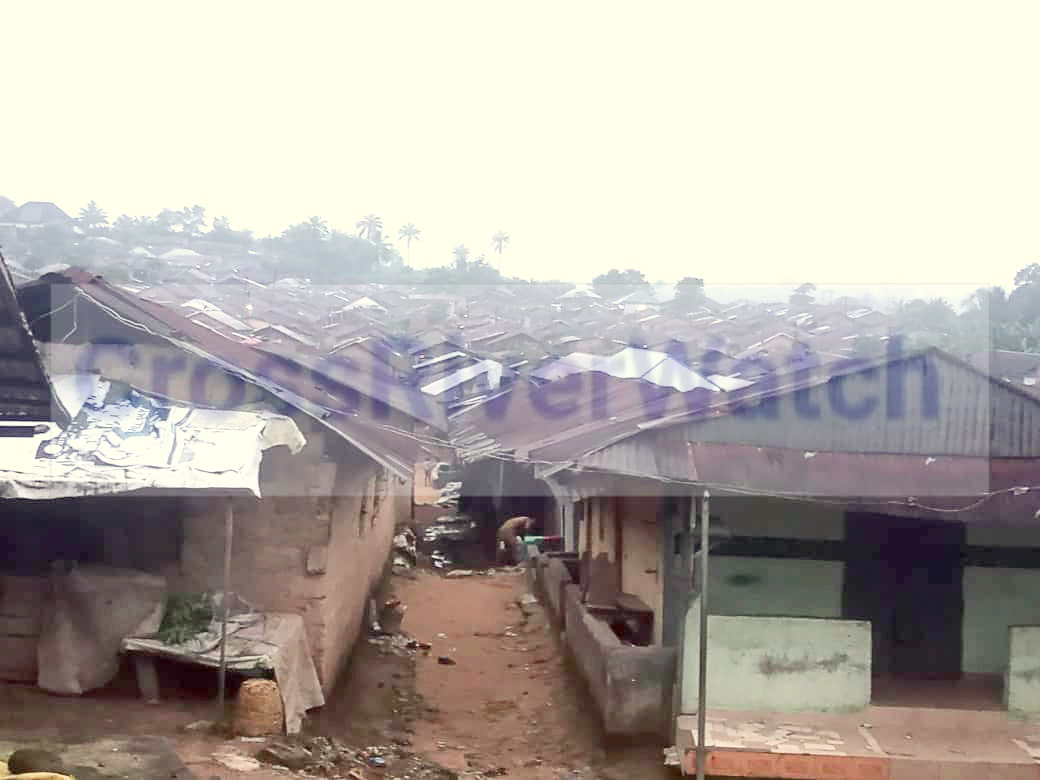
Behind the walls of Eburutu Barracks, fear is the most enduring resident. Their human rights violation is community living under the shadow of rules. The Community is a densely populated civilian enclave home to Efik, Ijagam, Igbos, Akwa Ibomites, Hausas, Yorubas, and other tribes. The structures, alphabetized from Line A to Z, are old, chaotic, and in many places are collapsing. Mud walls, bamboo partitions, and “face-me-I-face-you” layouts define daily life.
But it is not the living conditions that worry residents the most. It is the unwritten rules imposed by soldiers that dictate what civilians must do and when they must do it. A case of an animal kingdom where other animals fear the lion.
Watch Video Below

Landlords, many of whom bought their structures from retired soldiers, admit they live in a hysterical environment as well.
“We don’t want trouble with the military,” one landlord confessed. “The military owns this place. They told us to inform our tenants that fatigue is compulsory and no option. If we resist, we can be chased out at any time,” expressing fear if he dares mention his name.
Alongside forced labour, every household is compelled to pay a monthly levy of one thousand (1,000) Naira called “pass” to soldiers. Residents say they do not know who keeps the money or what it is used for.
Even the civilian leadership structure, the Mammy Market Chief and his executive, has little credibility among residents, this investigation revealed. Many accuse the executives of being “too loyal to the military,” protecting their own interests rather than speaking for the community.
“The chief knows civilians are suffering,” one of the female residents said. “But he will not speak. Nobody wants to offend soldiers.”
How Civilians Become A Labour Force
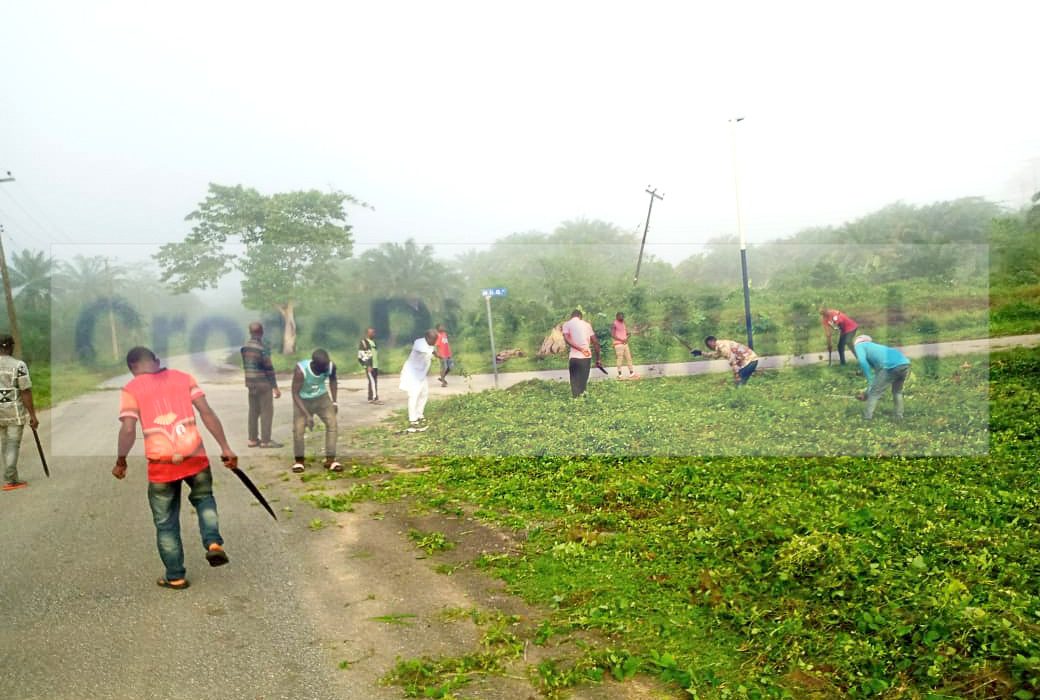
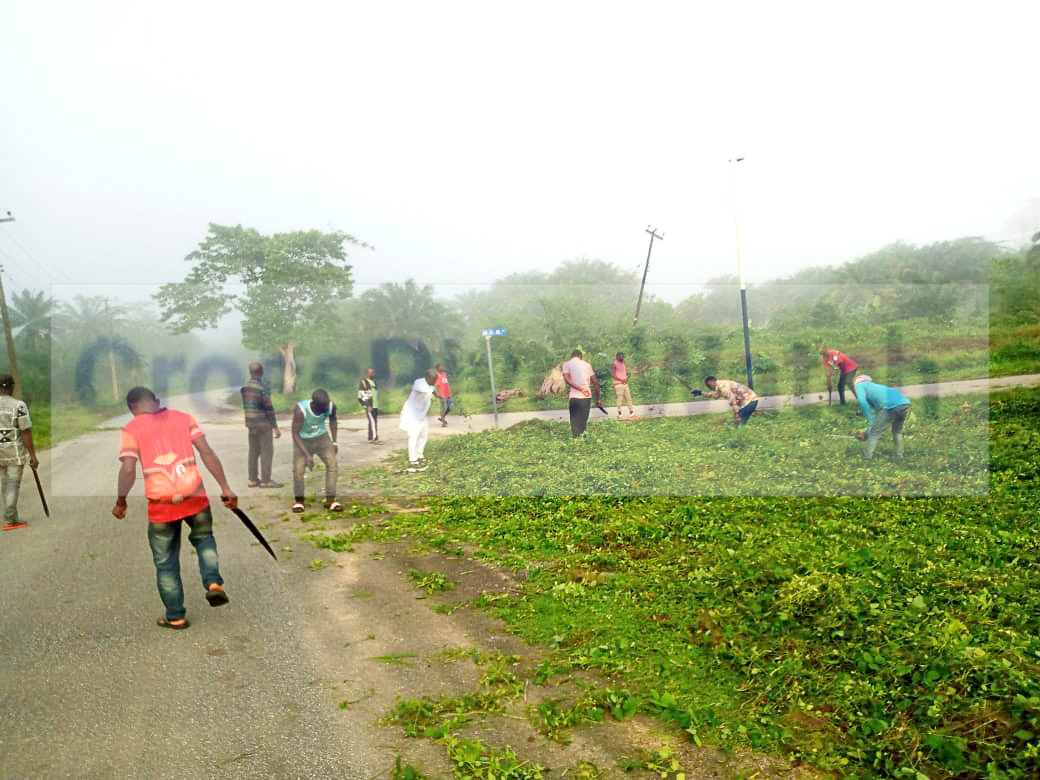
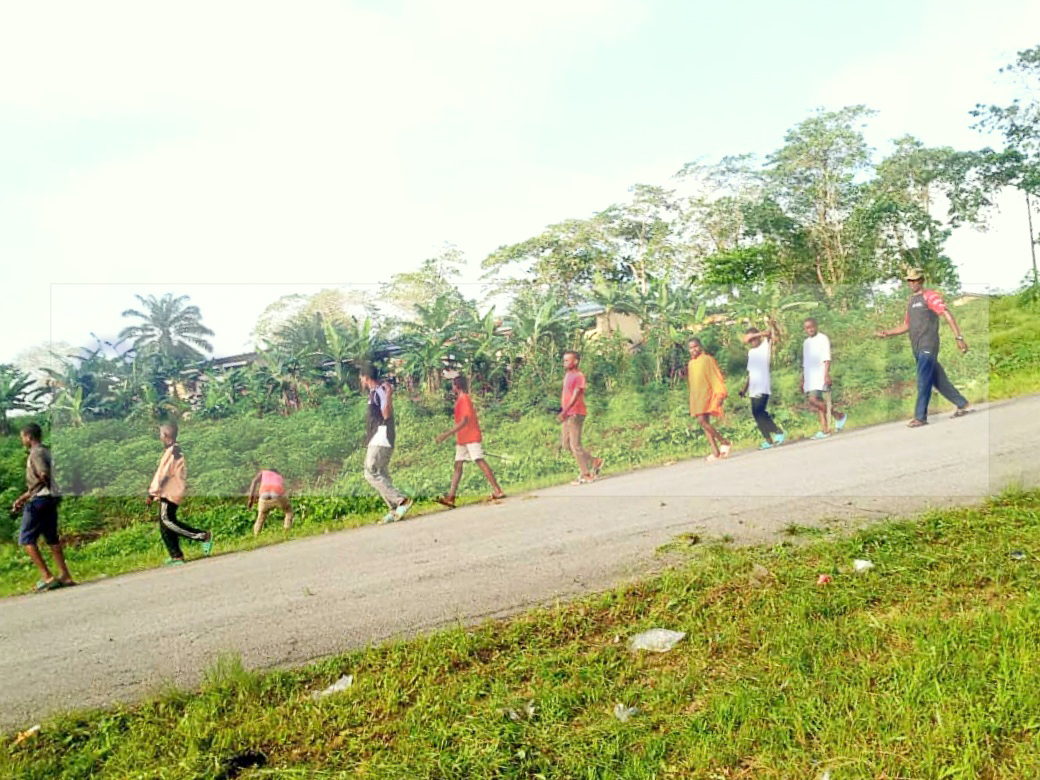
Every Saturday, the entire community is locked indoors until fatigue is completed. No one is allowed out of the gate. Every house must send one representative man, woman, or teenager to work in the barracks. Men are given cutlasses to clear bushes while women and children sweep offices and pathways. Some clean renovated buildings and drainage.
Fatigue is strictly monitored. Soldiers assign portions to groups, and civilians are not permitted to leave until the supervising soldiers approve the work. At the end of the exercise, civilians must write their house number in a “check book”, a record later used to identify defaulters who are punished severely in the guard room.
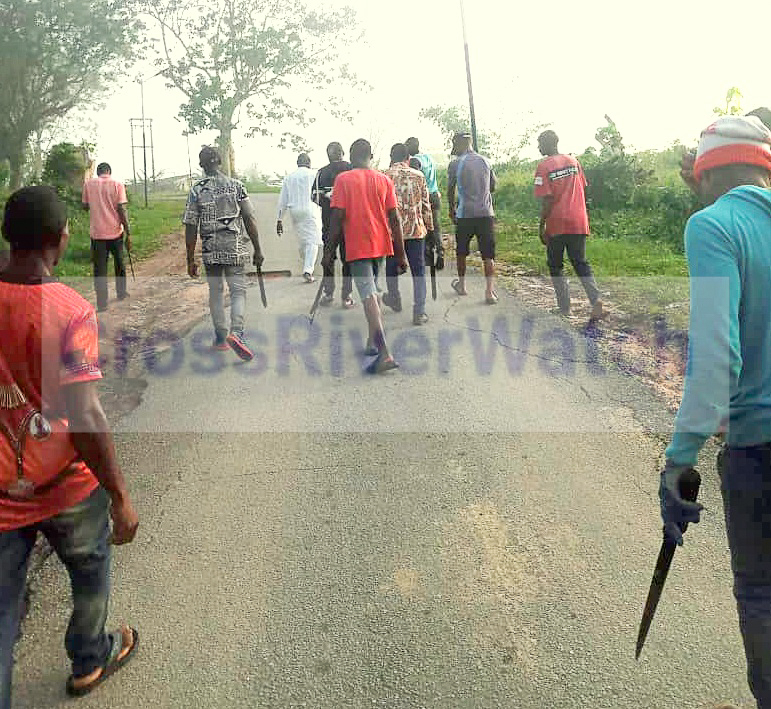
“If you finish your task, they can still move you to another portion,” another resident explained. “Until they say you can go, you cannot go.”
CrossRiverWatch independently observed one of the Saturday exercises and confirmed the use of house registers and military supervision. Based on our investigation, this forced labour falls into three categories, all in the name of “fatigue”.
The first form of forced labour is “general fatigue,” which is the most feared. Soldiers conduct daytime raids between 7 am and 10 am, picking up men and boys they find outside. These civilians are marched into the barracks and compelled to work, usually when the barracks expect high-level visitors or when urgent labour is required.
“There is no excuse,” a victim residing in the community said, pleading anonymously as well. “Even if you say you are going to work, interview, or catch up on any emergency, they will arrest you.”
Following the general fatigue is the “Barracks Fatigue”. From background research, this is a long-standing Saturday routine imposed on every household. Missing it is a serious offense that warrants arrest at night. An ex-soldier familiar with the system told CrossRiverWatch.
“Barracks fatigue has been there for a long time. If you skip it, your week will be horrible and miserable. You will either hide in the bush or end up in the guard room.” On the heels of “Barracks fatigue” is the Traders and Abattoir Fatigue. Traders in the market, abattoir workers, and motorcycle (okada) operators are targeted. They clean assigned areas mid-week and occasionally assist in barracks labour.
Army Raid Like Armed Robbery Attack
Failure to participate in fatigue attracts terrifying punishments. Residents describe soldiers storming homes at midnight with loud bangs, shouting, and door-hitting as if they were armed robbery attacks.
“They hit my door so hard the first night,” a resident recalled. “I almost fainted.” Arrests are usually accompanied by one civilian community leader who identifies defaulters by their house numbers.
Once detained, civilians are taken to a wet, mosquito-infested guard room where they are kept standing until dawn. The next morning, they are issued cutlasses and assigned heavy labour until the soldiers are satisfied.
“It is humiliation,” a victim described. “You lose sleep. You lose your job the next day. You lose your dignity.”
The Monthly ‘Pass’ Another Layer Of Control
Toward the end of every month, another squad moves from door to door like tax collectors, collecting the ₦1,000 pass. Unlike the fatigue squad, this group does not arrest defaulters. Instead, they lock or nail the doors of households who owe, and the defaulters’ belongings may be thrown out if they refuse to comply after a warning.
“They will evict you shamefully,” a source who experienced it said. “Even if it’s raining.”


The fear of humiliation keeps many civilians compliant. Many residents were hesitant to speak, even off record. After multiple attempts, a few shared their experiences under anonymity:
“They hit my door at 1 am. My wife tried to hide me, but they sent a boy inside who found me. I lost my job appointment the next morning. I told myself I would leave this place,” a resident who was arrested after just one month in the community shared.
Another victim questioned whether living around soldiers is a crime. Urging the government to look into the case of human rights abuse in the community.
A soldier who requested anonymity admitted that the new Commanding Officer had warned against using civilians for fatigue, but “some soldiers still do it without his knowledge.”
He added that night raids occur because “that’s when residents are at home.”
What The Law Says And Why The Practice Is Illegal
Legal experts say allegations of forced labour by soldiers amount to grave violations of Nigeria’s human rights and labour laws. Cross River-born Abuja-based lawyer First Baba Isa, Esq., described the practice as both unlawful and deeply abusive.
Barrister Isa could not believe what his ears heard when asked what the law says about the soldiers’ practice.
“That has gone beyond mere infringement of fundamental human rights,” Isa said. “It violates the right to freedom of movement, the dignity of the human person, and several other rights. Most disturbingly, it amounts to forced labour and modern enslavement.”
The Human Rights lawyer continued: “When civilians are coerced through fear and intimidation, it can also be described as terrorism. It clearly infringes on laws against torture.”
Nigeria’s legal framework leaves little room for ambiguity. Section 34 of the 1999 Constitution guarantees the dignity of every person and expressly prohibits torture, inhuman or degrading treatment, and forced or compulsory labour. While members of the armed forces may lawfully be assigned duties as part of service, civilians, including those living within military premises, are not exempt from constitutional protection.

The Labour Act further criminalizes coercions into unpaid labour without lawful justification, while the Armed Forces Act limits compulsory fatigue duties strictly to soldiers. Legal analysts note that no provision of Nigerian law authorizes military commanders to compel civilians to sweep barracks, clear bushes, clean offices, or perform any form of unpaid labour.
By extension, alleged practices such as night raids, arbitrary arrests, forced detentions, and confiscation of civilian property fall squarely outside the law and violate constitutionally guaranteed rights.
Under the Anti-Torture Act, 2017, any act by military personnel that intentionally inflicts physical or psychological suffering to intimidate, punish, or coerce civilians, including forced labour, constitutes a criminal offence.
The law applies fully to the Armed Forces and prescribes penalties of up to 25 years imprisonment, or life imprisonment where death results. Crucially, obedience to superior orders offers no legal defence.
Nigeria’s obligations also extend beyond domestic law. The country is a signatory to international instruments such as the UN Convention Against Torture and the African Charter on Human and Peoples’ Rights, both of which outlaw torture and forced labour in all settings, including military environments.
In legal terms, experts stress, forced civilian labour enforced through fear, violence, or abuse of authority qualifies as torture or, at a minimum, cruel and degrading treatment, regardless of whether it occurs in a barracks, mammy market, or any other location.
Victims are entitled to seek redress through the National Human Rights Commission, the Federal High Court under the Fundamental Rights Enforcement Procedure, labour courts, and civil rights organizations.
Yet, despite these protections, residents and this investigation shows that the practice persists inside Mammy Market in Eburutu Barracks.
Nigerian Army Supports Forced Labour On Citizens
The Nigerian Army has rejected claims that civilians in Eburutu Barracks are subjected to forced labour and illegal levies. In a telephone interview with CrossRiverWatch, the Public Relations Officer of 13 Brigade, Nigerian Army, Major Yemi Sokoya, said civilians in the Mammy community are bound by long-standing internal practices, such as the current practice.
He held that civilian structures within the barracks are rented, not sold, and that residents are expected to participate in maintaining cleanliness within the premises, whether they will or not. Adding that it applies across officers’ quarters, soldiers’ quarters, and the Mammy Market area.
“Anybody who resides in the barracks must clean the barracks. It’s a tradition both at the officers’ quarters and the soldiers’ quarters at the Mammy Market. If you are doing business at that place, you must be willing to come out and clean,” Sokoya said. “I am not sure anybody is being maltreated or beaten; they just have to make sure that the environment is clean,” he denied.

Asked whether this practice is an official Army policy requiring all civilians residing in military premises to participate in cleanup activities, and whether complaints of compulsion had ever been reported at the command level, the Army spokesperson insisted there was no coercion.
“There is nothing like being forced,” he said.
He noted that if any civilian feels abused, they deserve the right to report such officers to the appropriate authority in the community.
Regarding the compulsory monthly ₦1,000 “pass” collected from residents at Mammy Market, the Army spokesperson said he was not aware of such a levy and promised to investigate.
The Army’s claims contrast sharply with multiple accounts from residents who describe midnight arrests, detention, and compulsory labour enforced through fear.
While the military maintains that participation in clean-up is voluntary and can be outsourced, witnesses and victims insist the practice is enforced through intimidation, with little room for refusal, a contradiction that underscores the deep mistrust between residents and the barracks authority.
This report was produced with support from Civic Media Lab under its Grassroots News Project (GNP).
Since You Are Here, Support Good JournalismCrossRiverWatch was founded on the ideals of deploying tech tools to report in an ethical manner, news, views and analysis with a narrative that ensures transparency in governance, a good society and an accountable democracy. Everyone appreciates good journalism but it costs a lot of money. Nonetheless, it cannot be sacrificed on the altar of news commercialization. Consider making a modest contribution to support CrossRiverWatch's journalism of credibility and integrity in order to ensure that all have continuous free access to our noble endeavor. CLICK HERE |
New Feature: Don't miss any of our news again.Get all our articles in your facebook chat box.Click the Facebook Messenger Icon below to subscribe now
Text Advert by CRWatch :Place Yours


Will You To Learn How To Make Millions Of Naira Making Special Creams From Your Kitchen?.Click Here
Expose Your Business And Make More Sales. Advertise On CrossRiverWatch.com Today