
By Sylvia Akpan
Advocacy group, We The People and other stakeholders, have sued for urgent reforms to the Cross River State Forestry Law, 2010, citing lost of 60% of its original forest cover and the need to align with the present day realities.
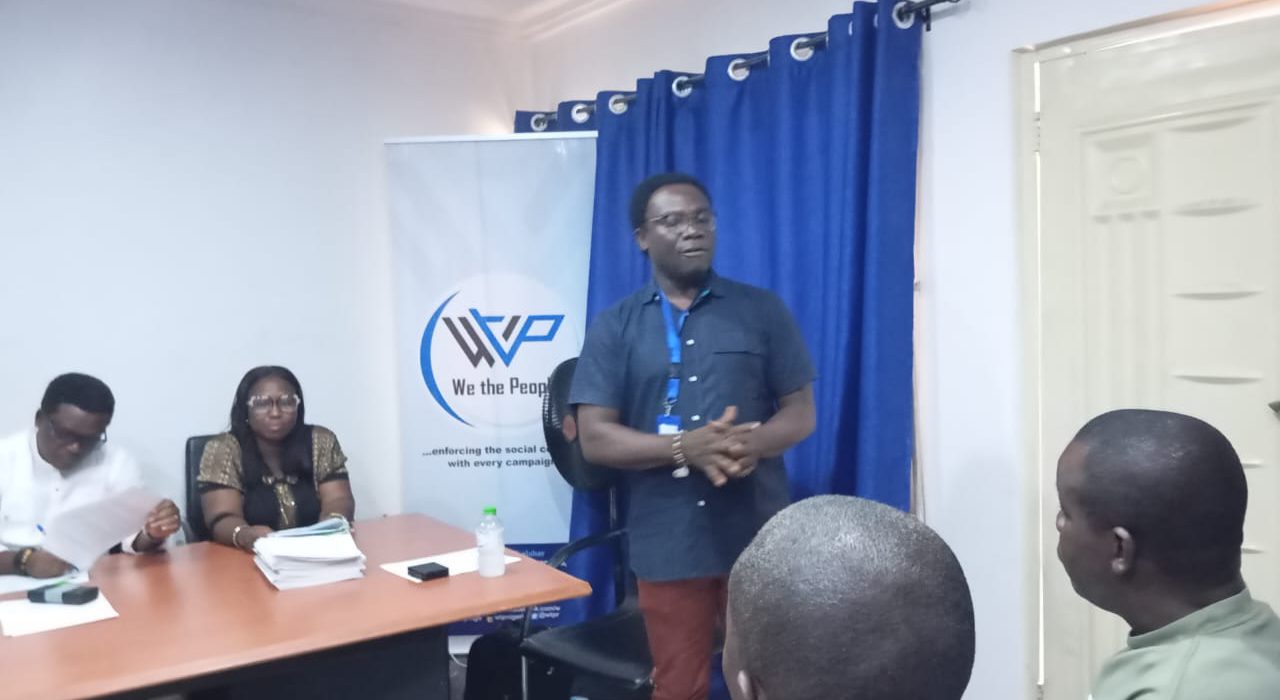
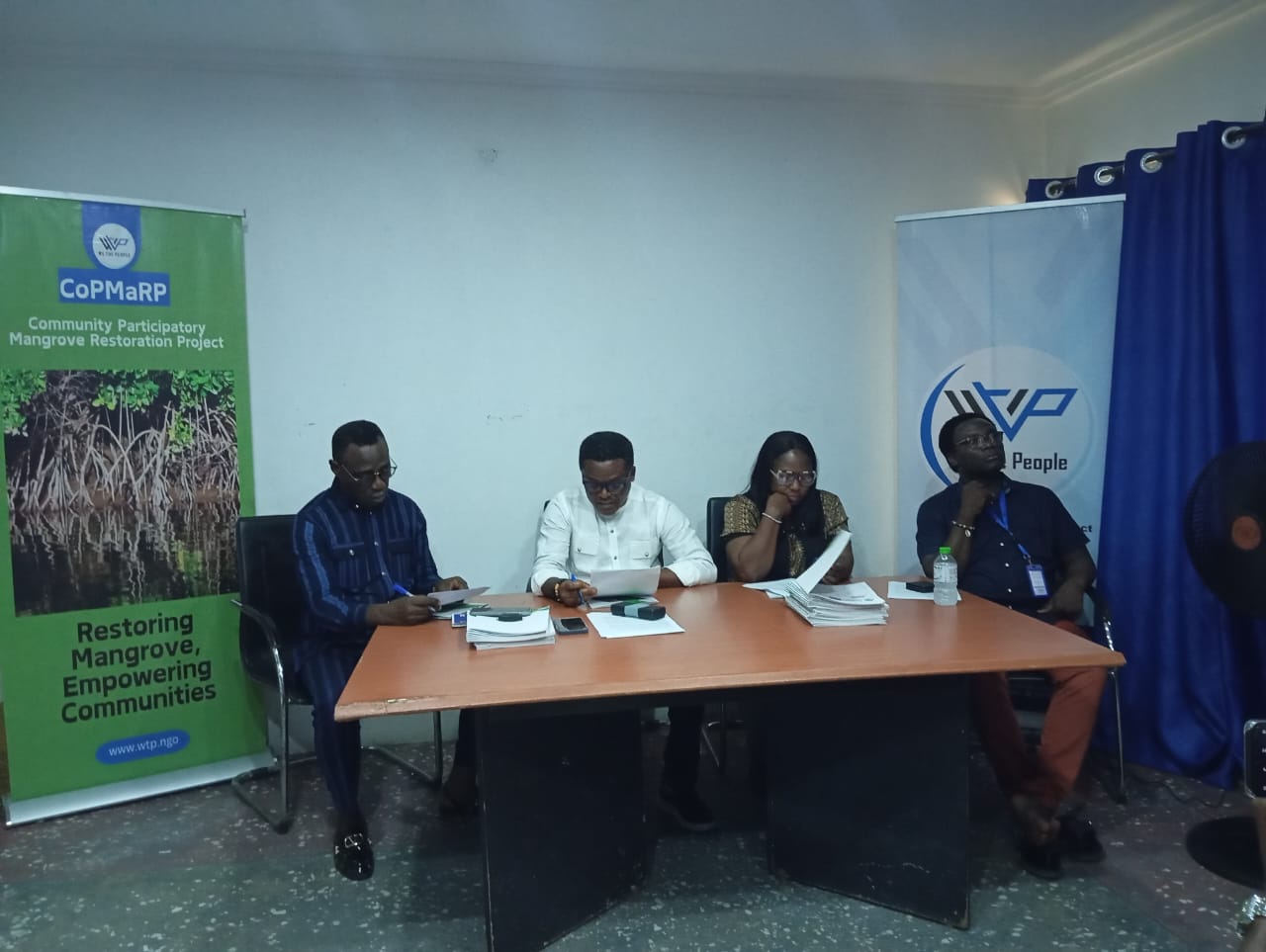
The call was made during a media briefing held on Wednesday, February 25th 2026, at We The People conference room, Calabar, Cross River State.
At the event, the group presented a report titled ‘Recommended Reviews of the Cross River State Forestry Law – The Imperatives of an Amended Cross River State Forestry Law’.
Welcoming participants, the Executive Director of We The People, Ken Henshaw noted that the essence of the review is to discuss the reforms of Cross River State Forestry Law and also see that the issues bothering it are properly structured and accounted for, especially as it concerns the economy of the people. He said citizens depend on the forest as their means of livelihoods.
Speaking at the briefing, Dr. Martins Egot, the Executive Director of Panacea for Developmental and Infrastructural Challenges for Africa Initiative (PADIC- AFRICA) addressed the urgency of the reform, noting that Cross River State is a home to Nigeria’s largest and most biodiverse tropical rainforest ecosystem.
De. Martins noted that forests form vital parts of the remaining Lower Guinea rainforest belt in West Africa.
According to him, the forest provide habitat for endangered species, regulate climate systems, protect watersheds, sustain forest-dependent communities, and contribute significantly to carbon sequestration. He lamented that despite their importance, the forests are disappearing.
“Cross River State has lost over 60% of its original forest cover. Large areas that were once dense rainforest have become degraded lands and grasslands. Thousands of logs are extracted daily- both legally and illegally. Wildlife hunting and trade continue to threaten biodiversity. Adding that agricultural expansion, infrastructure development, and weak enforcement mechanisms have compounded the crisis.”


He explained that the Cross River State Forestry Law, 2010 was enacted to provide a framework for forest conservation and management. At the time, it represented an important step forward. He observed that the realities of 2026 are significantly different from those of 2010.
We The People Executive Director, Ken Henshaw who showed similar concern, stressed that “The forest is more than just a bunch of trees as it is a restaurant and a shelter for some indigenous people. He added that history needs to be preserved as part of the natural existence.
Also speaking, the Executive Director of Nelson Ofem Initiative, Nelson E. Ofem, highlighted the recommendations of the report in five major areas which includes the aligning of forest governance with climate change commitments, strengthening deterrence against forest crimes, reforming forest governance structures, promoting ecotourism as an additional economic pathway for the state as well as centering indigenous and forest dependent communities.
He added that reforming the forestry law is not merely about protecting trees but about protecting biodiversity, livelihoods, climate stability and protecting the economic future of the state.
He affirmed that society is life and society will be destroyed if the forest is destroyed.
The Chairman, NGO Coalition for environment, Dr. Odigha Odigha, lauded the media for covering the issue and called for a deeper engagement.
“We must go beyond press briefings if we are to truly educate the public, including those in government. Some officials find themselves in positions where they are meant to render stewardship to the environment. If you are not protecting the environment, then you are not responding to what matters most to humanity,” he said.
He stressed the need for sustained environmental education within the media, urging journalists to be empowered to ask critical questions of those in power.
Describing Cross River as a biodiversity hotspot, he warned that the state risks becoming known only in name for its forests if urgent reforms are not implemented.
“We are gradually losing what remains. The forests that are left are being exploited for timber revenue, yet this is the only significant rainforest Nigeria has. If we lose it, we lose a vital part of our natural heritage,” he added.
Since You Are Here, Support Good JournalismCrossRiverWatch was founded on the ideals of deploying tech tools to report in an ethical manner, news, views and analysis with a narrative that ensures transparency in governance, a good society and an accountable democracy. Everyone appreciates good journalism but it costs a lot of money. Nonetheless, it cannot be sacrificed on the altar of news commercialization. Consider making a modest contribution to support CrossRiverWatch's journalism of credibility and integrity in order to ensure that all have continuous free access to our noble endeavor. CLICK HERE |
New Feature: Don't miss any of our news again.Get all our articles in your facebook chat box.Click the Facebook Messenger Icon below to subscribe now
Text Advert by CRWatch :Place Yours


Will You To Learn How To Make Millions Of Naira Making Special Creams From Your Kitchen?.Click Here
Expose Your Business And Make More Sales. Advertise On CrossRiverWatch.com Today