By Kelvin Ololo
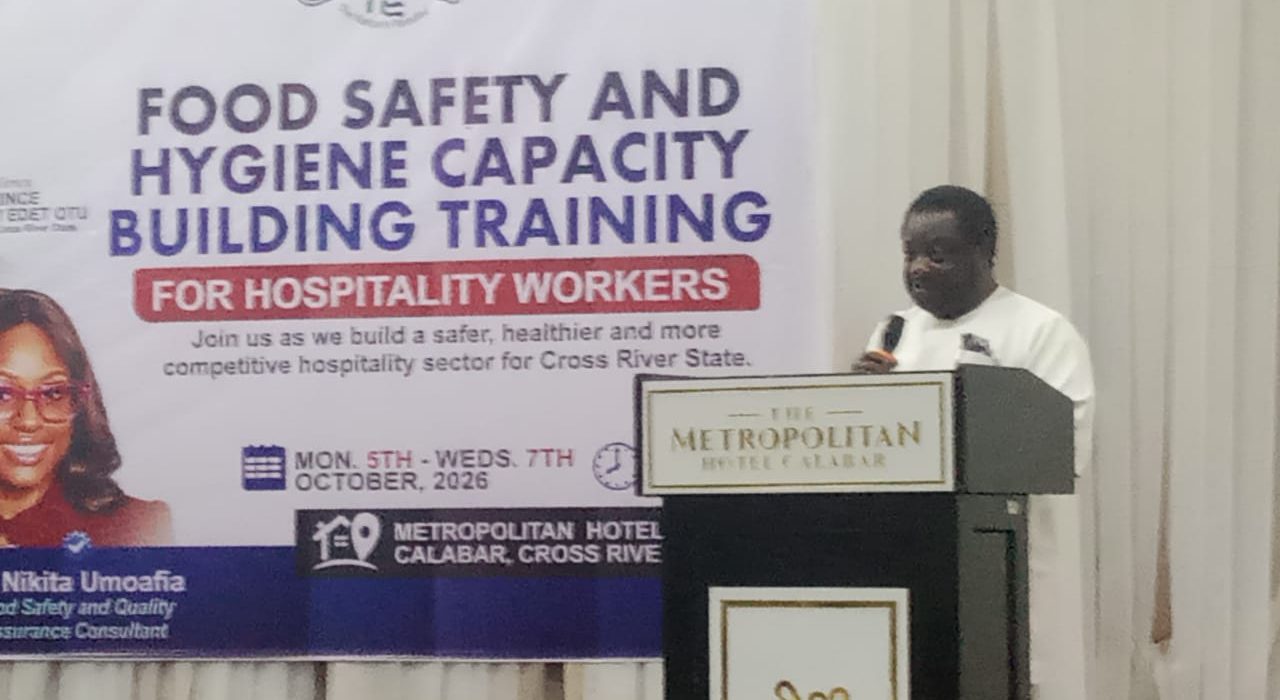
As Cross River State prepares to welcome visitors for Nigeria’s biggest street carnival – Carnival Calabar, the state government has commenced a three-day food safety and hygiene training for hospitality workers, with participants drawn from the 18 local government areas of the state.
The training, which began on Monday, October 5, 2026, Calabar, is aimed at strengthening food-handling standards and building the capacity of workers across the hospitality and tourism value chain ahead of the influx of visitors expected during the carnival season.
Declaring the training open on behalf of Governor Bassey Otu, the Managing Director of the Cross River State Tourism Bureau, Mr. John Utsu Atsu, said the timing of the program was important given the state’s position as a major tourism destination.
He said food is an important part of the state’s cultural identity and tourism experience, stressing that proper food safety and hygiene are essential to protecting visitors and residents while promoting the state’s hospitality industry.
“As we formally declare this training open, what you learn will travel beyond this hall to the world at large.”

Atsu encouraged the participants to take the knowledge acquired during the three-day program beyond the training venue and apply it in their respective workplaces, describing the training as an opportunity to improve service delivery across the hospitality sector.
Speaking on behalf of the Commissioner for Health, Dr. Henry Egbe Ayuk, Dr. Simon Obogo drew attention to the public health implications of unsafe food.
According to him, the World Health Organization (WHO) reports that about one in 10 people fall ill from contaminated food, noting that unsafe food remains a significant threat to public health.
He urged participants to comply with food safety guidelines issued by the Ministry of Health and ensure proper hygiene at every stage of food preparation, storage and service.
“If we get food right, we get tourism right in Cross River State,” he said.
The Permanent Secretary, Ministry of Tourism, Mrs. Eme Affiah, also underscored the connection between food quality and the visitor experience.
In her goodwill message, she said tourists were more likely to return to destinations where they enjoyed positive experiences, including quality and safe food.
“Tourists will always come again if they have good taste in their mouth and good experiences,” Affiah said.

Also speaking, the Chairman of the Restaurants and Bar Owners Association of Nigeria (RABON), Cross River State Chapter, Mr. Felex Dien, said the association has more than 10,000 members across the state.
Dien described the training as timely, particularly with the state preparing to receive a large number of visitors, and assured that the association would support compliance with relevant food safety and hygiene guidelines.
He appreciated the state government for organizing the capacity-building program and said improved standards would benefit both hospitality businesses and their customers.
The Convener of the training and Special Adviser on Hospitality to the Governor, Mr. Albert Kusi, said the program we are you will steer td how to study servicewas designed to strengthen capacity and introduce improved professional standards across the hospitality sector.
Kusi said the initiative formed part of the governor’s efforts to build competency within the industry and ensure that Cross River’s hospitality workforce is better prepared to receive visitors.
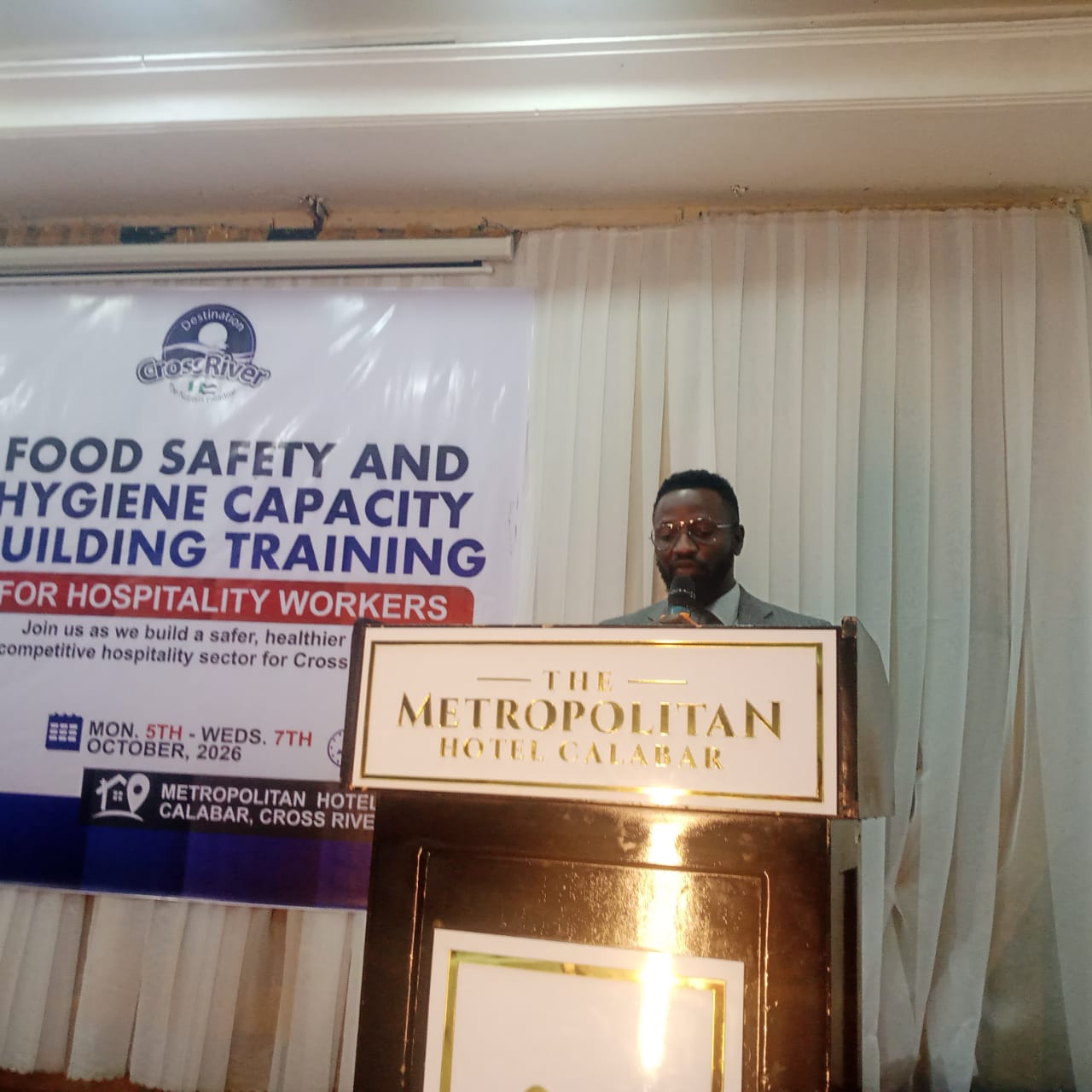
He described the training as the beginning of a new standard of practice in the sector and urged participants to make effective use of the opportunity by applying what they learn and transferring the knowledge to their colleagues.
With representatives attending from all 18 local government areas, the program brings together stakeholders across the state’s hospitality landscape at a time when food safety is increasingly central to the visitor experience.
For a state whose tourism appeal extends beyond festivals and attractions to its food, culture and hospitality, stakeholders at the training stressed that a successful tourism season must also be measured by the quality, safety and confidence attached to what visitors are served.
Short Link:
Leave feedback about this