By Sylvia Akpan
It was already late on Tuesday evening when CrossRiverWatch arrived at Ikang Primary Health Center in Bakassi Local Government Area of Cross River State.
Before the facility came into view, however, the road seemed to disappear into darkness.
The unpaved approach was swallowed by thick vegetation. There was no gatekeeper, no security post and no visible light from the building to suggest that a health facility serving a remote community was prepared to receive patients who might need care after dark.
Beyond the signpost was a facility that raised a bigger question about public investment in primary healthcare: what happens when money is spent to renovate a health center, but the infrastructure, manpower and oversight required to sustain that investment are missing?
The World Health Organization (WHO) defines universal health coverage as ensuring that people can access the health services they need, when and where they need them, without financial hardship. Such services include health promotion, prevention, treatment, rehabilitation and palliative care.
Primary healthcare is at the heart of that goal. But a health center cannot serve its community effectively if the building is deteriorating, essential equipment is failing or there are too few workers to attend to patients.
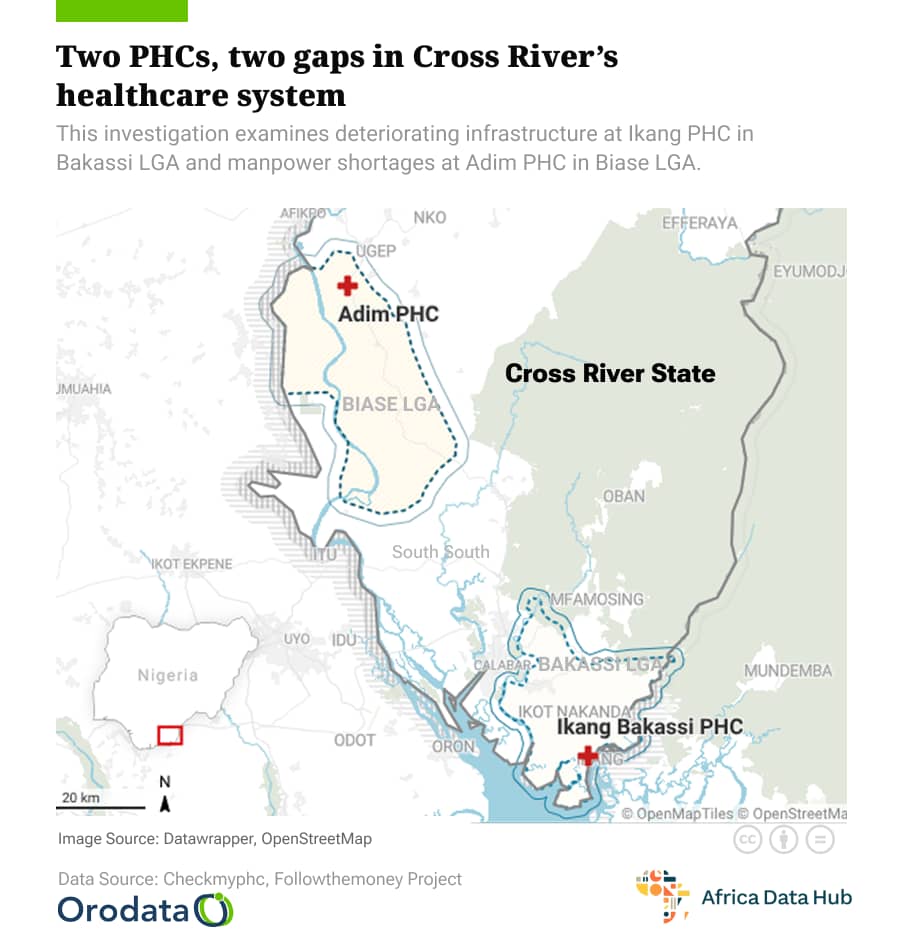
This report examines the condition of Ikang PHC barely a year after its renovation and the manpower shortage at Adim Primary Health Center in Biase Local Government Area.
Together, the two facilities reveal a troubling gap between investment in healthcare infrastructure and the systems needed to make those investments work for the people they are intended to serve.
Renovated Ikang Facility Showing Signs Of Decay
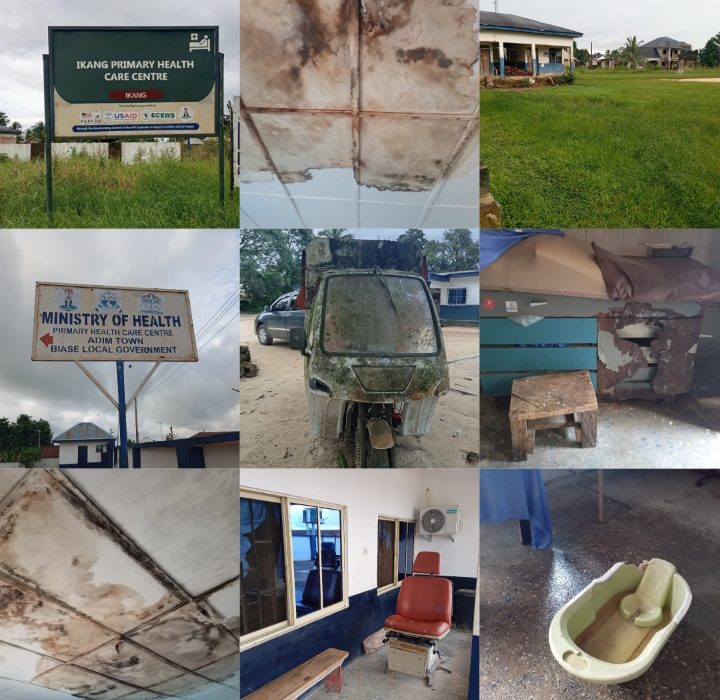
The health center bore the name of a public institution, but as darkness fell, it appeared largely deserted. Inside the compound, sections of the perimeter fence had given way. Cracks were visible on the walls, while the roof showed signs of damage and leakage.
For a primary health center expected to provide essential healthcare to residents of Ikang, the condition raises an uncomfortable question of how can communities depend on a facility for essential care when the facility itself is struggling to remain safe and functional?
The concern goes beyond aesthetics. For pregnant women, children, older people and other residents who rely on the center, a poorly maintained environment can make seeking care more difficult and less reassuring.
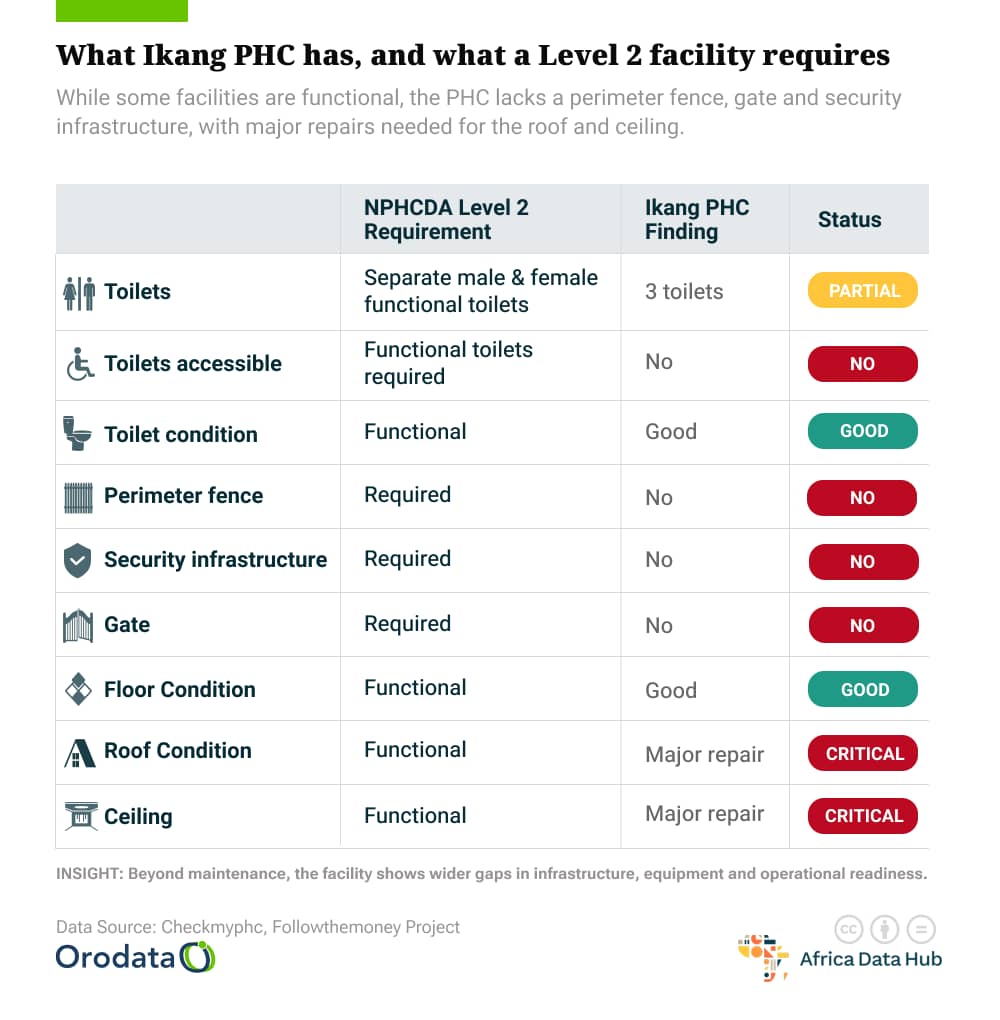
At Ikang PHC, some services remain functional, but basic infrastructure and security concerns persist. The facility lacks a perimeter fence, gate and adequate security measures, while repairs are needed on the roof and ceiling.
These shortcomings also raise questions about accountability. If a public health facility requires major repairs barely a year after renovation, who is responsible for addressing the defects? How frequently are such facilities inspected? What mechanisms exist to ensure that public funds spent on renovation produce infrastructure capable of serving communities for years rather than months?
For residents, the issue is ultimately not about the appearance of a building. It is about whether the center can provide safe and dependable healthcare when they need it.
Labor Ward Struggling Under Deteriorating Conditions
Inside the labour ward, the situation becomes more personal. A volunteer worker at the facility, who pleaded anonymity, said the condition of the ward has made routine care increasingly difficult.
“We have major challenges here that we need the government to look into and address. In the labor ward, for instance, the couch is faulty and needs to be replaced. We also have a leaking roof and damaged doors,” the worker cried out.
A severely deteriorated wooden door riddled with holes, splinters and signs of termite damage and decay.
“When it rains, we have to move the patients’ beds to one side and use rubber to cover the affected area. It is really difficult for us.
“Some of the equipment here is also not working. In fact, one of the faulty couches was repaired with a staff member’s personal money because there was no other option.”
Her account exposes a problem that goes beyond a broken couch or leaking roof. The facility was reportedly renovated only about a year ago. If infrastructure and equipment are already failing, the renovation itself demands scrutiny.
A public renovation project should not be judged merely by the amount of money released, the buildings listed in a government document or the day a contractor hands over the facility. Its real test is what remains after the contractor leaves.
At Ikang PHC, the physical condition of the facility raises questions that can only be answered by examining the renovation records, project specifications, cost, contractor, quality of work and post-renovation monitoring.
When The Roof Leaks, Patients Bears The Brunt
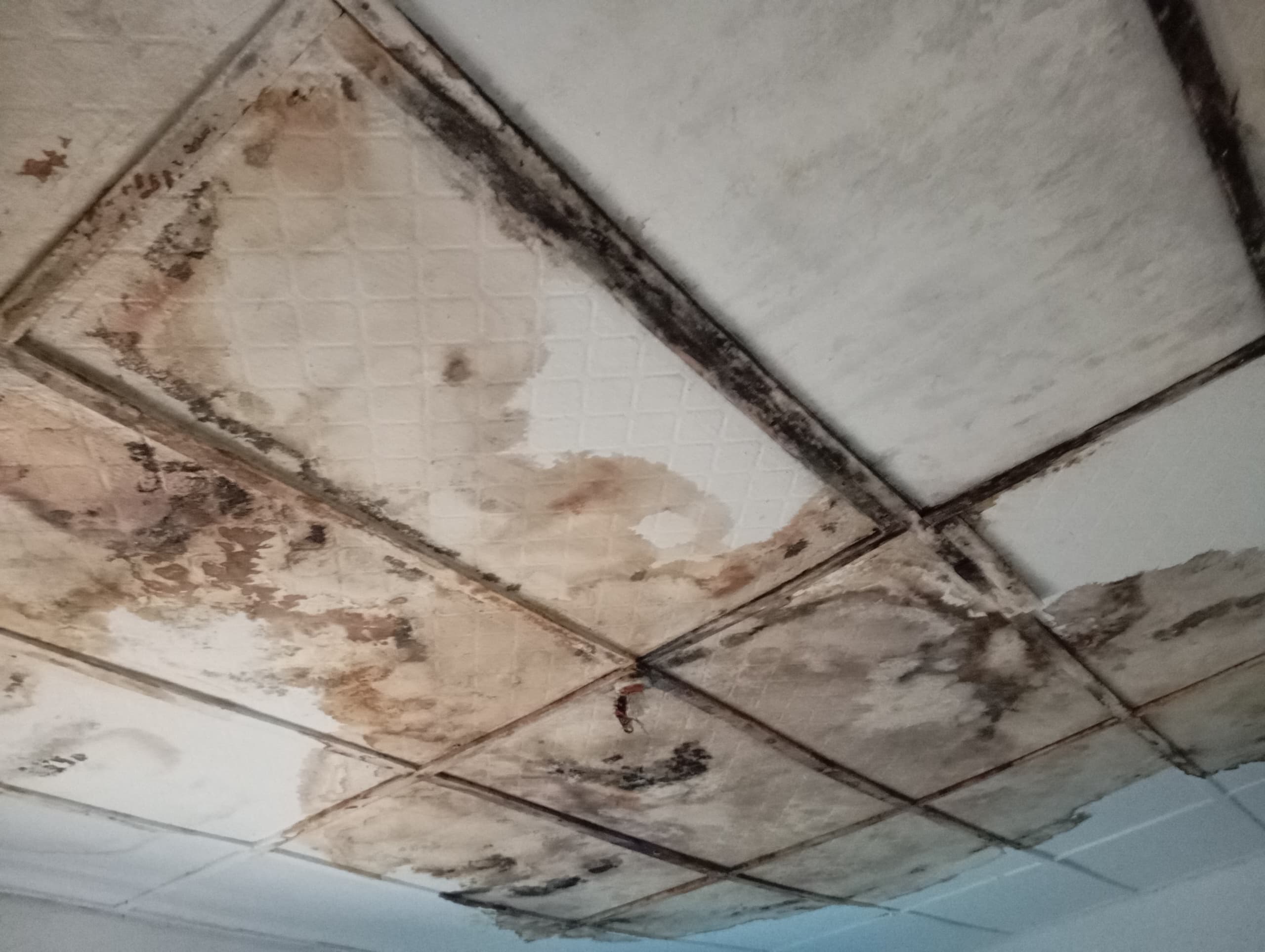
Some of the clearest evidence of deterioration is directly above the heads of patients and health workers. The ceiling carries broad areas of brown discolouration consistent with prolonged exposure to moisture.
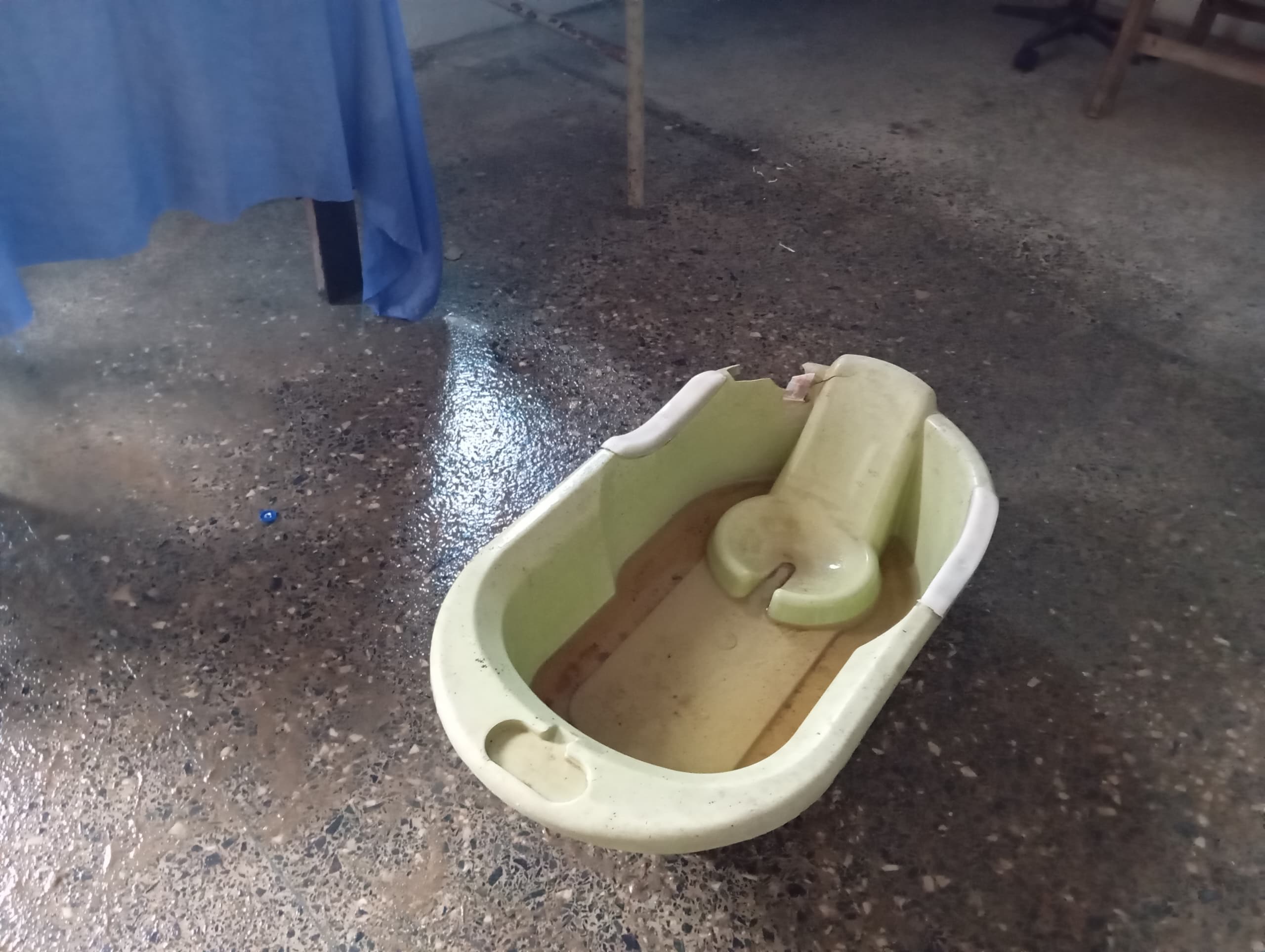
When rain penetrates the roof, water collects inside the building. A basin placed beneath a leaking section becomes an improvised response to a problem that should ordinarily have been addressed through proper roofing and drainage works.
A light green plastic baby bathtub sitting on a wet floor, filled with dirty rainwater collected from a leaking roof, offers a particularly striking image of the problem. The picture is difficult to reconcile with a health center said to have undergone renovation only about a year earlier.
But the roof is only part of the story. A damaged examination table sits inside the facility, its paint peeling and its storage section badly corroded. A large rusted opening has eaten into part of the structure.
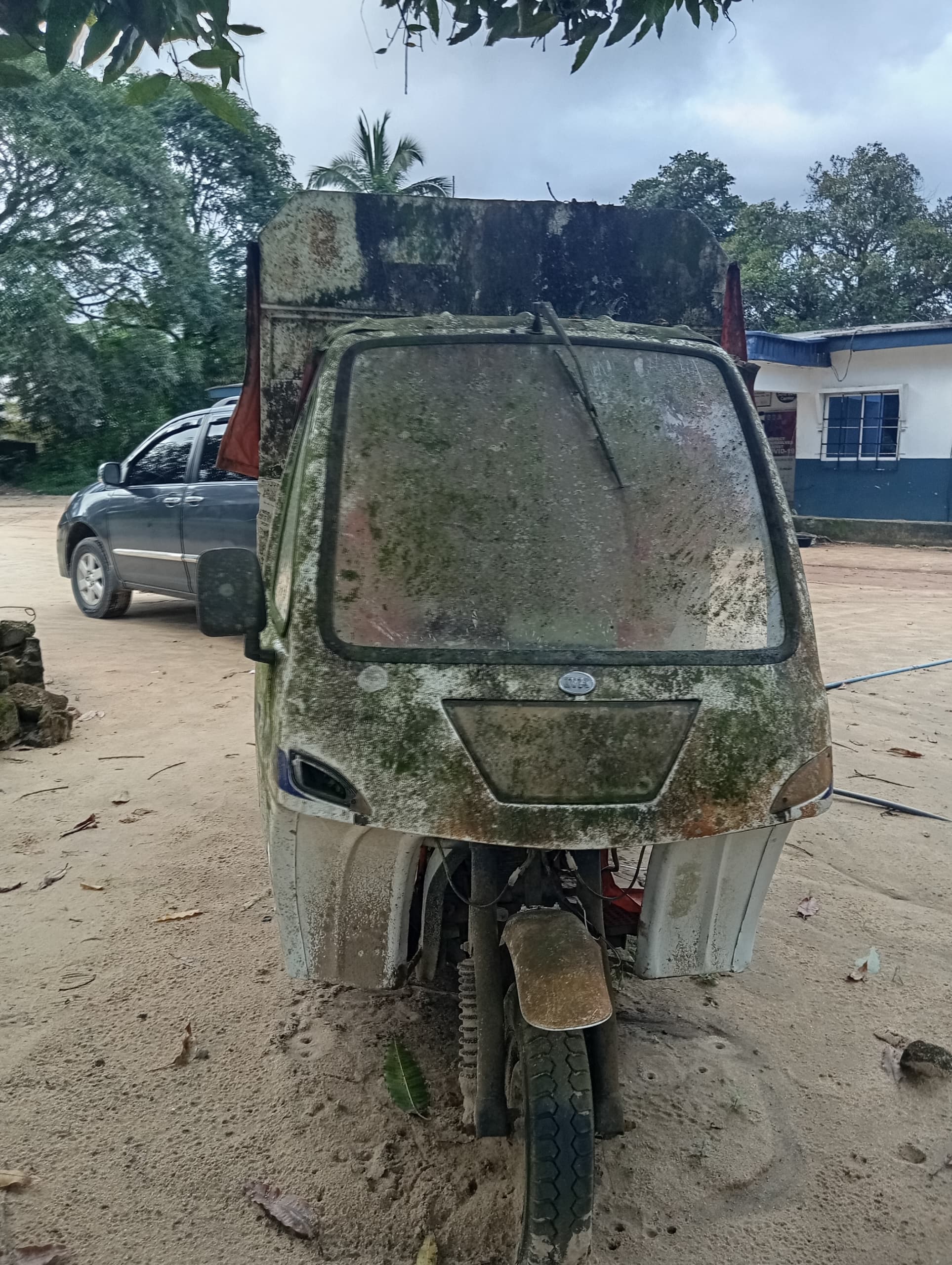
Furniture and administrative equipment also show signs of deterioration. Broken drawers and peeling surfaces are visible in offices, while loose papers and records are exposed to an environment already affected by dampness and dust. Outside, an ambulance sits abandoned amid the overgrown compound. Dust, grime and algae cover the vehicle.
An ambulance that could potentially provide emergency transportation has instead become another physical marker of neglect. Taken individually, each defect might appear manageable. Together, they tell a different story of a leaking roof, cracked walls, damaged doors, broken windows, faulty furniture, deteriorating equipment, an abandoned ambulance, an overgrown compound and a damaged perimeter fence. All within a health facility on which the surrounding community depends.
Following The Money
The condition of Ikang PHC becomes more significant when placed against Nigeria’s broader investment in primary healthcare.
In 2025, the Federal Government approved N32.88 billion as implementation funding for the third quarter of the Basic Health Care Provision Fund (BHCPF).
In October 2025, the government also announced the disbursement of approximately N32.9 billion under the revised BHCPF 2.0 framework, stating that the funds were intended to support more than 8,000 primary healthcare centers nationwide.
The stated objectives included supporting essential operational costs, health-worker incentives, emergency services and essential medicines. BHCPF was established under Section 11 of the National Health Act (NHAct) 2014 to support the Basic Minimum Package of Health Services and improve healthcare financing.
The question for communities such as Ikang is whether these investments are translating into health centers that are safe, functional, adequately staffed and capable of providing the services for which they were established.
Beautiful Outside, Ugly Inside: Adim PHC Story
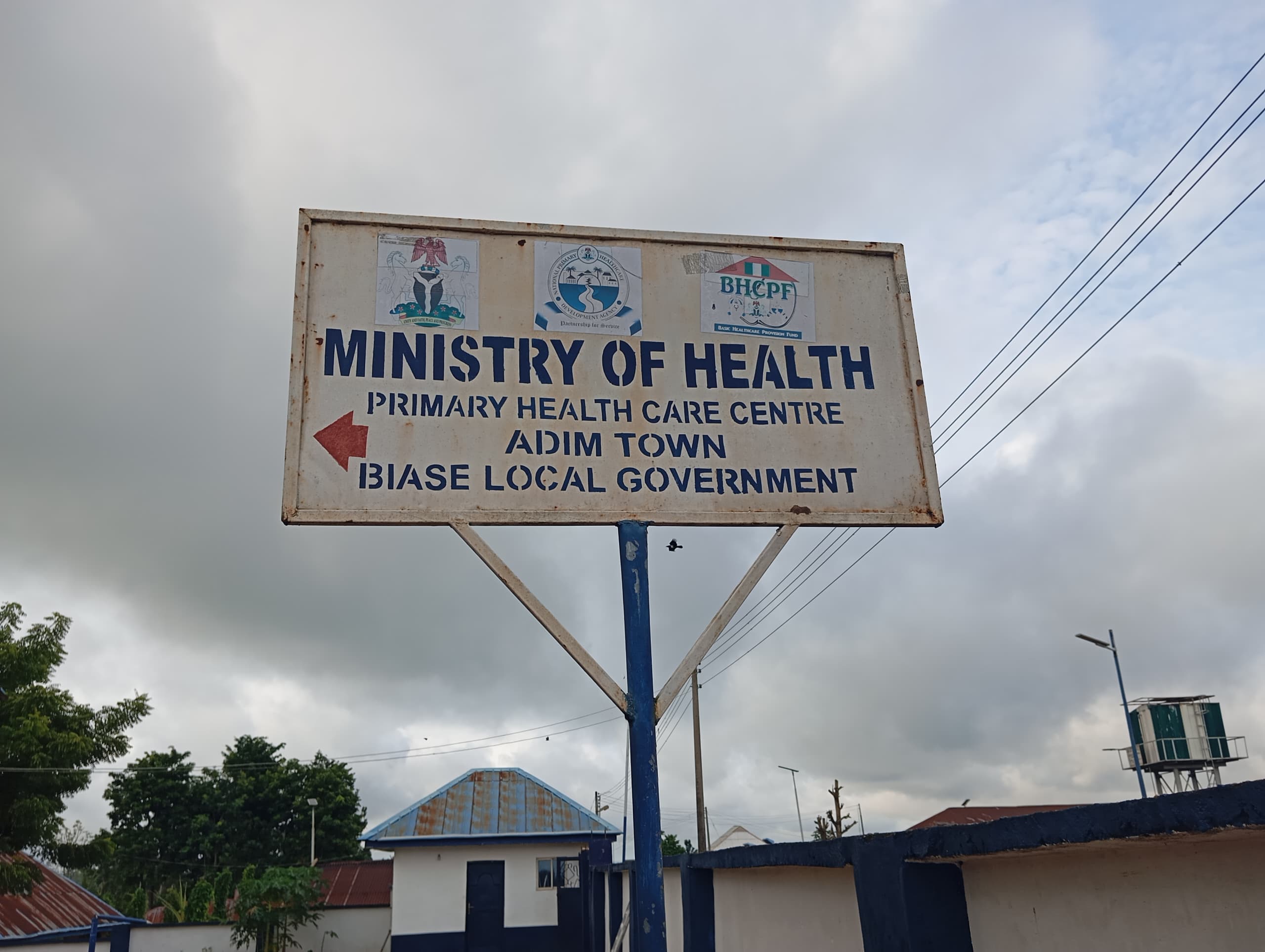
A few minutes past 7:PM, CrossRiverWatch arrived at Adim Primary Health Center in Biase Local Government Area. The evening breeze had grown cold. Dark clouds gathered overhead as thunder rolled across the sky and flashes of lightning briefly illuminated the surroundings.
Inside the facility, however, the picture was reassuring. Solar lights brightened the premises, while modern medical equipment filled the renovated health center. The building looked prepared to provide care even after daylight disappeared.
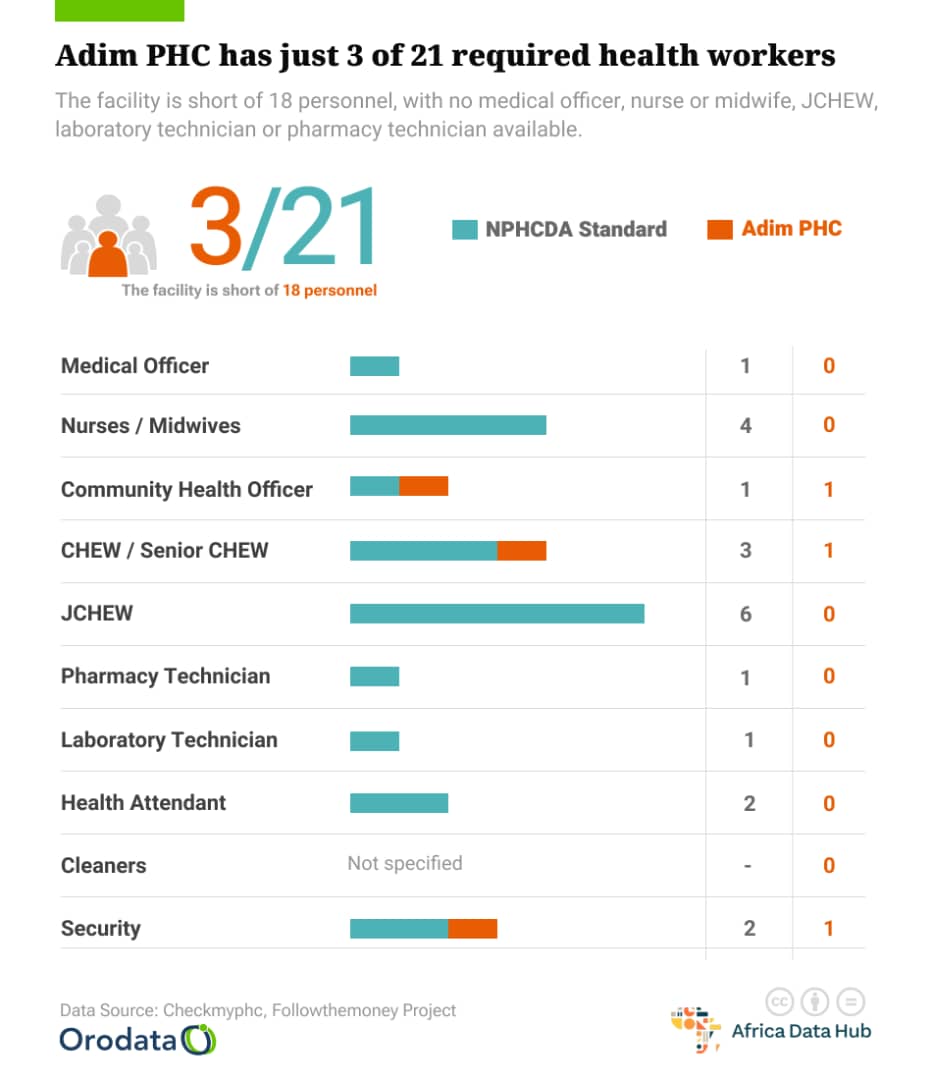
But as the evening progressed, another reality emerged. The building was ready. The question was whether there were enough hands to keep it running. The answer became evident through the experience of one health support worker, Blessing Aba, a 27-year-old mother of two.
One evening, Aba found herself attending to a patient on a drip while simultaneously caring for her young children. Her baby was crying from hunger. Rain was approaching and the children’s clothes were still outside. Rice was on the fire.
There was a patient who needed attention, children who needed care and a home that still needed to be managed. The scene captures the human cost of a problem that is often reduced to a line in an official report – manpower shortage.
Residents said the facility is sometimes left with only one support staff member or a Community Health Extension Worker (CHEW), placing enormous pressure on those available, particularly when emergencies arise. For residents of remote communities, a dysfunctional primary healthcare center is not simply an inconvenience.
Distance turns infrastructure and staffing problems into healthcare access problems. When a rural health center cannot provide adequate care, patients may have to travel to larger facilities, often at considerable cost. For poor households, that cost can include transportation, lost income, delayed treatment and additional expenses for medicines and procedures.
CSO Calls For Public Inquiry Into Healthcare Fund Management In Nigeria
Lawrence Peter, Program Officer for Policy Alert, said the conditions observed at Ikang and Adim raise concerns about the effectiveness of public health investments.
According to Peter, the deterioration of Ikang shortly after renovation and the manpower shortage at Adim suggest possible weaknesses in implementation, oversight and accountability. He said access to functional facilities and qualified health workers is an important factor influencing community health outcomes.

“When renovated facilities begin to crack shortly after completion or remain understaffed, vulnerable populations are denied quality healthcare services, thereby widening health inequalities and undermining public trust.”
Mr. Lawrence said government transparency should go beyond announcing financial releases, arguing that citizens should have access to information about project costs, contractors, timelines and expected outcomes; advocating for independent project assessments, community-based monitoring and periodic audits to ensure healthcare projects meet quality standards and provide value for money.
Manpower Gaps Threaten Sustainability Of PHC Investment – Expert
Dr. Shehu Martins, a physician, pharmacist and epidemiologist, said inadequate manpower and poor facility management could undermine government investments in Nigeria’s primary healthcare system.
Speaking with CrossRiverWatch on the state of primary healthcare in the country, Martins said the system was designed to bring essential healthcare services closer to Nigerians, particularly people living in rural and underserved communities.
According to him, primary healthcare centers, clinics and health posts serve as the first point of contact for patients before referrals are made to secondary and tertiary facilities where necessary.
“If properly put in place, we should have one of the best healthcare systems in the world,” he said. “Every corner you go, every place you go, you should either meet a primary healthcare center, a primary healthcare clinic or a health post,” he opined.
However, Dr. Martins identified the availability of trained healthcare workers as one of the major challenges threatening the effectiveness and sustainability of PHC facilities.

He said government investments in construction and renovation could amount to wasted resources if there are not enough trained personnel to operate, maintain and utilize the facilities.
He explained that healthcare delivery requires more than physical infrastructure. Facilities must also be supported by personnel with the technical knowledge required to operate equipment and maintain services, citing vaccine storage as an area where a shortage of skilled personnel could have serious consequences.
The pharmacologist explained that vaccines require strict temperature control to remain effective, meaning that having a refrigerator or cold-chain equipment does not automatically guarantee proper vaccine preservation.
According to him, inadequate manpower can affect not only service delivery but also the physical condition and utilization of healthcare facilities.
Government Defends Renovation Program, Admits Manpower Shortage
The Director-General of the Cross River State Primary Health Care Development Agency (CRSPHCDA), Dr. Vivian Mesembe, has acknowledged the state’s large number of healthcare facilities, many of which she said are already in poor condition before the current administration assumed office.
She said the state has about 1,045 health facilities, comprising primary healthcare centers, health centers and health posts, making it impossible to renovate all of them simultaneously.
“We cannot renovate 1,045. The 1,045 comprises PHCs, health centers and health posts.”
According to her, the government began with major PHCs, particularly facilities considered to be in the worst condition.
Speaking with CrossRiverWatch in her office in Calabar, she said about 100 facilities across the state’s 18 local government areas had been renovated so far, with the government targeting the 196 major PHCs before moving to other health centers and health posts.
Dr. Mesembe explained that facilities encountered in poor condition during field visits may simply be among those yet to benefit from the renovation program.

She said the government’s renovation program includes the provision of basic infrastructure such as water and electricity.
“For every one we are renovating, we are putting a borehole and light.”
However, she said the expansion of the program depended heavily on funding.
She said the state was also looking towards HOPE-PHC, which could provide an opportunity to renovate additional facilities if secured.
“Everything depends on funding. If there’s funding, we’ll do it.”
On the manpower shortage affecting facilities such as Adim and Iwuru, Dr. Mesembe acknowledged that the state does not have enough healthcare workers.
“Yes, we have a shortage of manpower.”
She said the Governor had recently approved the employment of additional workers, although the new recruits were still insufficient to meet the state’s needs.
According to her, facility heads have also been authorized to engage ad-hoc workers and volunteers through BHCPF funds where immediate staffing gaps exist.
“Shortage of manpower is seen across Nigeria, it’s not just Cross River State, but the government is doing something about it.”
The Director-General also defended the agency’s monitoring of renovation projects, saying teams, consultants and architects are deployed to assess the work.
She said the responsibility does not end when a facility is renovated, explaining that the quarterly BHCPF allocation can be used to address maintenance problems that subsequently emerge.
This story was produced for the Follow the Money Investigative Program and supported by the Africa Data Hub and Orodata Science.
Short Link:
Leave feedback about this