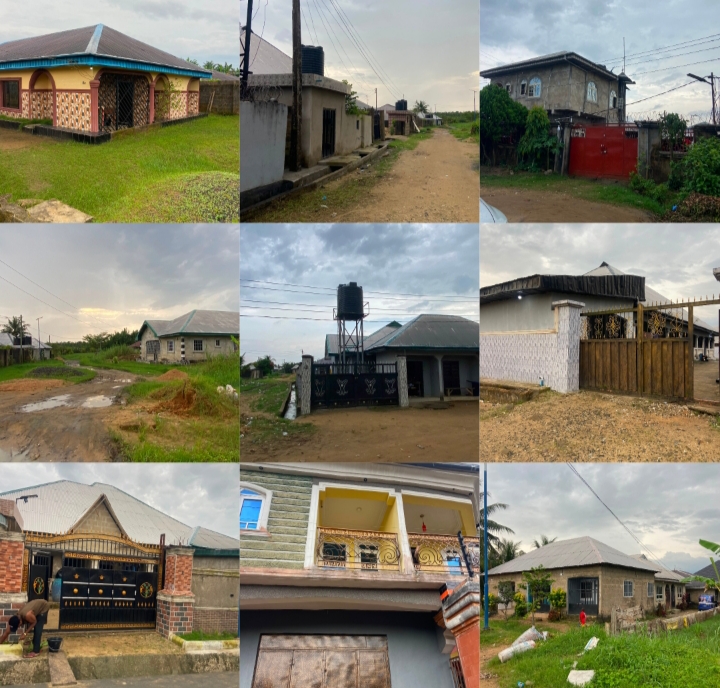
By Peace Ejame
The rising cost of accommodation in Calabar, the Cross River State capital, has sparked growing disagreements between landlords and tenants, with both sides blaming the economic hardship for the surge in house rents.
While landlords attribute the increases to the rising cost of building materials, maintenance, waste disposal, levies and other expenses, tenants say some property owners are exploiting the economic situation to impose unreasonable rents without corresponding improvements to their properties.
Mrs. Edet, a landlady who has been in the business for over eight years, said she recently increased the rent on her property because of the rising cost of maintenance and building materials.
She explained that maintaining the compound, particularly during the rainy season, had become increasingly expensive. According to her, tenants are informed before any rent increase is implemented.
Another landlady, Mrs. Koko Bassey, who owns a property around Afokang area in Calabar South Local Government Area, said the difficult economic situation had made rent increases necessary.
Mrs. Bassey, a retiree, said rental income and proceeds from her small garden were her major means of livelihood. She also complained that some tenants fail to properly maintain rented properties, leaving landlords to bear the cost of repairing damages.
Similarly, Mr. Ekpeyong Asuquo, a landlord in Ekpo Abasi, said rising taxes, agency charges, waste disposal costs and other levies had increased the financial burden on property owners.
He noted that building materials were also significantly more expensive than before, although he acknowledged that some landlords increase rents out of greed. He advised tenants to maintain cordial relationships with their landlords to encourage communication and understanding.
Chief Muri Simon, a property owner along Afokang, said the rent increases were largely a response to the broader economic crisis rather than deliberate attempts to exploit tenants.
He cited the increasing cost of renovating properties, particularly toilets and sanitation facilities, as one of the major expenses landlords face. According to him, renovation costs have multiplied significantly over the past two years.
He called on the government to reduce the cost of building materials and other construction-related expenses, saying this would help ease the burden on both landlords and tenants.
Mr. Edet Emmanuel, a landlord along Inyang Street, also complained about the cost of repairing damages allegedly caused by tenants. He cited issues including excessive water usage, damaged doors and blocked soakaway systems.
He said he often spends a substantial portion of rental income on repairs and maintenance. However, he added that he sometimes considers the circumstances of existing tenants and does not increase rents for everyone at the same time.
Tenants Raise Concerns
Tenants on their part, however, said the increases had become excessive and were not always justified by improvements in the properties.
A tenant in Calabar, Asu Nyen, said the rent for her one-bedroom apartment increased from N400,000 to N1 million in 2026 despite the absence of any renovation or significant improvement to the property.
John Otu, a content creator, also criticized what he described as poor maintenance by landlords in his area, accusing some property owners of charging high rents despite failing to address poor road conditions and other environmental problems affecting tenants.
Favour Ewa, who lives in Calabar South, complained that she pays a substantial amount for accommodation despite serious problems with the property. She said her ceiling leaks and the walls are affected by mold, while the landlord has failed to address the problems.
For Asu Daniel, a student who relocated from Imo State to study in Calabar, shared that the cost of accommodation became a major factor in his decision to defer his admission and consider studying elsewhere.
Another tenant living in Iman street said she pays about N2 million annually for a two-bedroom apartment. At the same time, a tenant in Akpabuyo Local Government Area, said she might be unable to renew her tenancy because of the latest increase. She said the cost of a single room had become too expensive and that she was considering moving into a hostel.
She expressed that the condition of the apartment has made her uncomfortable and questioned why tenants should continue paying high rents when basic maintenance is neglected.
House Agents Fingered
Some house agents have also been fingered by the recent rent increase in Cross River and other parts of the country.
They are accused of inflating agency fees, pressurizing landlords to increase years of charge and other charges for their own advantage without considering the hash economic difficulties.
“Agents inflate rental prices and increase agency fees, while negotiating with landlords to secure their own percentage from the transactions,” a tenant Godsfavor said.
Miss.Victoria recounted an alleged experience in which she paid N100,000 as an agency fee but never got to inspect or secure the promised accommodation.
Calls For Government Intervention
The conflicting experiences of landlords and tenants highlight the growing pressure on the housing market in Cross River State as the cost of living continues to rise.
While landlords argue that higher rents are necessary to cover increasing maintenance and operational expenses, tenants contend that some property owners are transferring the full burden of the economic crisis to renters without providing adequate housing conditions.
Stakeholders have called for government intervention to reduce the cost of building materials and other construction inputs.
They advocated measures to address rising land and housing costs and the establishment of an effective rent regulatory framework in Cross River State that would protect tenants from arbitrary increases while also recognising the legitimate costs incurred by property owners.
Recalled that the Cross River State Government had appealed to landlords, landladies and property owners to consider the biting economy before increasing rent.
The Commissioner for Lands, Hon. Dr. Erasmus Ekpang, made the appeal to landlords across the state to show compassion and restraint by reconsidering excessive increases in house rents.
READ: Cross River Government Appeals To Landlords Over Incessant Rent Increment
He warned that the rising cost of accommodation, particularly at a time when many families are struggling to afford food and other necessities, could further deepen the hardship confronting residents.
The Commissioner urged property owners to consider the welfare of their tenants and adopt a more humane approach to tenancy and rent matters, noting that the economic difficulties facing residents require understanding and restraint.
He said landlords should see their properties not only as investments but also as homes occupied by individuals and families who deserve dignity, security and stability.
Short Link:
Leave feedback about this