Education is widely regarded as the foundation of national development and a powerful tool for transforming lives. It equips individuals with the knowledge, skills, and values needed to contribute meaningfully to society. In Nigeria, education is often described as the key to success and a pathway out of poverty.
However, the increasing cost of education has raised serious concerns about whether the average Nigerian can still afford to send their children to school.
Today, many Nigerian families struggle to pay school fees, purchase textbooks, provide learning materials, pay for transportation. One of the major challenges facing Nigerian families is the rising cost of education. Over the years, many households have experienced financial difficulties due to inflation, unemployment, and the increasing cost of basic necessities.
For parents with several children, paying school fees and providing educational materials can become a heavy burden. Some families struggle to provide their children with uniforms, textbooks, writing materials, and other necessities required for effective learning.
The situation is even more challenging for parents who depend on low-income jobs, petty trading, farming, and other small businesses. Their earnings may not be sufficient to meet household needs and educational expenses simultaneously.
As a result, some parents are forced to make difficult decisions about which children to send to school or how to manage limited resources to keep all their children in school.
For university students, the cost of obtaining higher education in Nigeria has also become a major concern. University students often face several financial challenges beyond tuition and other institutional charges. Accommodation, transportation, feeding, textbooks, internet access, and practical materials all contribute to the cost of obtaining a degree. Students who live far from their institutions may spend a significant amount of money travelling to and fro school.
For students in public universities, including the University of Cross River State (UNICROSS), the financial demands of university life can be difficult for families with limited income. Even when students secure admission into public institutions, the cost of sustaining their education can be overwhelming.
Some students engage in small businesses, part-time jobs, or other activities to support themselves financially. Although these activities may help them meet their needs, balancing work and academic responsibilities can be challenging.
It is observed that the increasing cost of education has several consequences for individuals and society. First, it can contribute to school dropout rates. When parents cannot afford school expenses, their children may be forced to interrupt their education or abandon it entirely.
At the same time, expensive education increases inequality – children from wealthy families may have access to better educational opportunities, while those from low-income households may struggle to obtain the same quality of education. In today’s world, students who lack textbooks, internet access, proper accommodation, or sufficient food may find it difficult to concentrate on their studies. The consequences of this is that when many young people are unable to complete their education, the country risks losing valuable human resources needed for economic growth, innovation, and national development.
At the center of this all is the government with a role to play to salvage the situation. Government at all levels shoulders the responsibility to make education accessible and affordable to all citizens. Although Nigeria has public schools and universities, affordability involves more than simply having more institutions available. Families must also be able to meet the costs associated with attendance and learning.
The government should as a matter of necessity increase investment in public education, improve school infrastructure, provide adequate teaching materials, and ensure that public funds allocated to education are used transparently. Scholarships, bursaries, and student loan programs can also assist students from low-income families.
However, these support systems should be accessible, transparent, and properly monitored so that assistance reaches those who need it most. Also, improving teachers’ welfare, providing functional libraries and laboratories, and expanding access to digital learning resources can help ensure that students receive quality education without placing excessive financial pressure on their families.
While government intervention is essential, parents and communities can also contribute to improving access to education. Parents can plan their finances and prioritize educational expenses as much as their circumstances allow. Communities, religious organizations, non-governmental organizations, and charitable foundations can support disadvantaged students through scholarships, donations of learning materials, and other educational programs.
Similarly, private individuals and successful professionals can also establish initiatives that assist students who demonstrate commitment to learning but lack the financial resources to continue their education. However, these efforts should complement, rather than replace, the government’s responsibility to provide accessible and quality education.
Education remains available through public schools, universities, and other institutions, but the total cost of obtaining and completing an education has become difficult for many low-income families to manage. Affordability differs from one household to another. A family with a stable income may be able to meet school expenses, while a family struggling to afford food, housing, and healthcare may find even basic educational costs overwhelming.
Therefore, the real issue is not simply whether schools exist, but whether ordinary Nigerians can access quality education without being pushed deeper into financial hardship. Education should not become a privilege reserved only for those who can afford it. Every child deserves a fair opportunity to learn, develop their talents, and pursue a meaningful future.
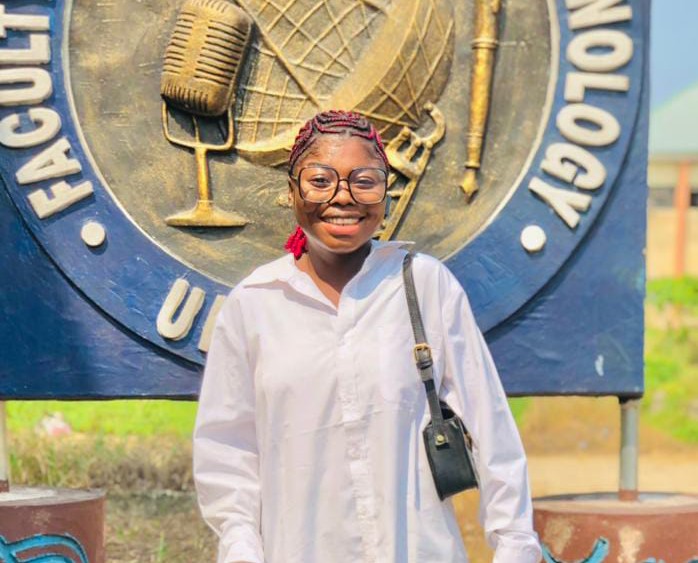
Christiana Oku-Geni is a 300-level student of the Department of Mass Communication, University of Cross River State (UNICROSS) and currently undergoing her mandatory Industrial Training program with CrossRiverWatch.
Note: opinion expressed in this article is strictly attributed to the author Christiana Oku-Geni and does not represent the opinion of CrossRiverWatch or any other organization the author works for/with.
Short Link:
Leave feedback about this