By Sylvia Akpan
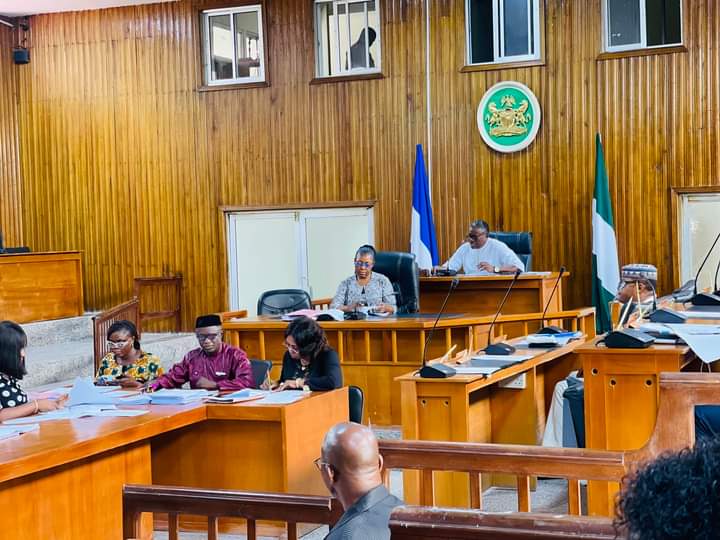
The Cross River State House of Assembly has passed the Cross River State Customary Court Bill, 2026 into law, introducing reforms aimed at strengthening customary justice administration and improving access to justice at the grassroots.
According to a statement issued by Matthew Okache, the Chief Press Secretary to the Speaker, the Bill was passed after the House considered and adopted the report of the Committee on Judiciary, Public Service Matters, Public Petitions and Complaints Commission.
Presenting the committee’s report, its Chairman, Rt. Hon. Davies Etta, said the committee consulted widely before finalizing the legislation.
He said stakeholders consulted included the Chief Judge of the State, traditional institutions, customary court stakeholders and members of the public, who participated through a widely publicized public hearing.
According to Etta, the new law seeks to reform the customary court system established under the 1976 Law and later codified in 2004, while improving professionalism, administration and record keeping within the courts.
A key provision of the new law requires anyone appointed as Chairman of a Customary Court to be a legal practitioner with the requisite years of professional experience.
The law also prescribes minimum qualifications for other members of the court and provides for improved conditions of service.
Another significant reform is the introduction of proper court registers and systematic record keeping. Under the new arrangement, designated officers will be responsible for recording proceedings and maintaining official court records, replacing the previous practice where the Chairman and members of the court also doubled as record keepers.
The legislation was expanded from two parts: 65 sections and one schedule under the previous framework to 10 parts, 66 sections and two schedules.
The restructuring accommodates contributions from stakeholders and covers the establishment and jurisdiction of customary courts, court proceedings, ancillary powers, control and transfer of cases, appeals, court officers, rules of court and miscellaneous provisions.
The law further provides for the composition of customary courts to include a Chairman and two members, with provisions covering quorum, tenure and an expanded jurisdiction to handle matters considered appropriate for local determination, including gender-based violence matters within the limits of the law.
Following consideration of the committee’s report, the Bill was read for the third time and passed into law.
Speaking after the passage, the Speaker of the Assembly, Rt. Hon. Elvert Ayambem, described the legislation as a major step towards judicial reform and improved access to justice at the grassroots.
Ayambem commended members of the House and stakeholders for their contributions to the legislative process, stressing the importance of strengthening institutions responsible for delivering justice to residents.
Short Link:
Leave feedback about this