
Umar Abubakar was arrested by the Nigeria Police Force on the 6th day of May, 2026, a few days before his wedding. He was never granted bail. He was never convicted. But he was held in Prison anyway in violation of his fundamental rights to liberty and freedom of movement. He had a right to be arraigned before a competent court within 24/48 hours. He was never arraigned.
Like a law- abiding citizen, Umar did the right thing. He approached the Federal High Court, Yola Division and filed a fundamental rights enforcement application. The Court heard him, granted his application, and ordered his release.
But guess what.
The security and custodial agencies refused to obey the order. Umar fell sick during his unlawful incarceration. Yet no one thought it wise to provide him with medical attention or comply with the Order of the Federal High Court mandating his release. Umar died in custody on the 8th of October 2026.
Read that again. A Federal High Court ordered his freedom, and a custodial facility kept him until death took him.
This is not an isolated case. I earlier wrote about the 37 alleged miners who died in the custody of the Nigerian Security and Civil Defence Corp (NSCDC), and I hoped then that we had learnt something.
Umar’s death and the unfortunate circumstances surrounding it shows that we have not.
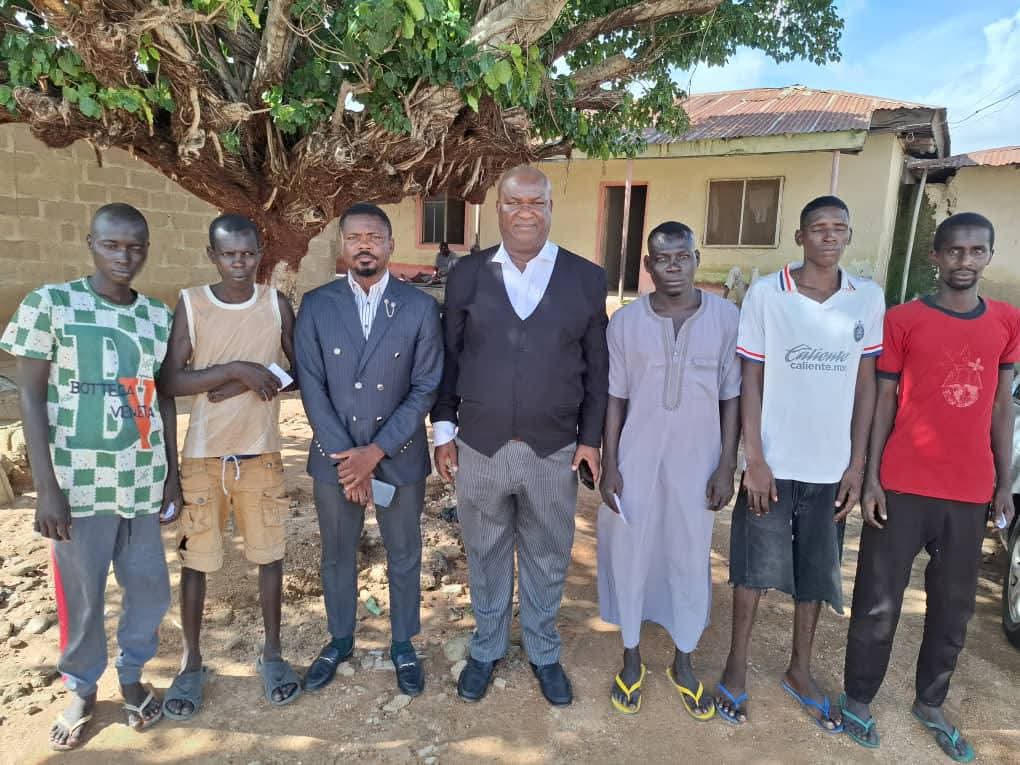
I do not write as a spectator. This year alone, my office has secured the release of 12 inmates with similar cases from the Jalingo Custodial Center, pro bono. As a matter of fact, the Federal High Court Jalingo Division, presided by Hon. Justice Mashkur Salisu awarded damages ranging from 6 to 1 million Naira as damages to each of these inmates.
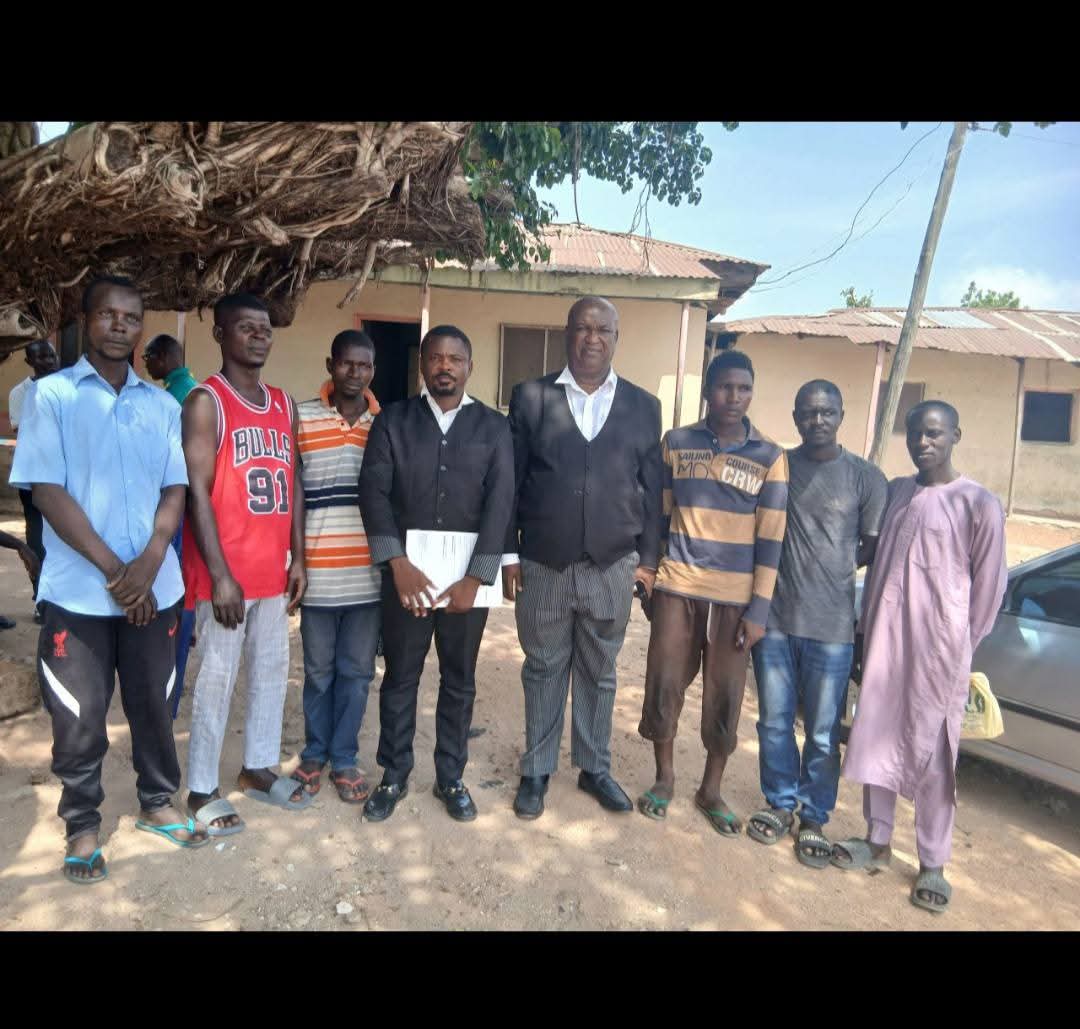
One of the 12 inmates had been held for 6 good years, without trial. Many of them did not even know why they were there. Some were only a signature/legal advice away from freedom, and that signature/legal advice never came.
If my law firm, with limited resources and manpower could identify 12 people illegally detained in one custodial center, how many more are sitting in the other prisons, jails, detention centers, custodial centers and dungeons with no lawyer, no money, and no Umar-style court order?
But let’s be honest, even if you have a lawyer and money to procure one, or a valid court order mandating your release, the current regulatory dispensation and enforcement procedures can still be sidestepped to keep you locked up indefinitely. The case of Umar Abubakar is a case in point.
Let us be honest about the current state of the law guaranteeing your freedoms and mine:
• Section 35 of the Constitution protects personal liberty and sets strict limits on how long a person can be held before being brought to court.
• Section 36 of the Constitution presumes every person innocent until proven guilty.
. Section 41 of the Constitution protects your right to freedom of movement.
• Section 287(3) of the Constitution says court decisions MUST be enforced by all authorities.
• The Administration of Criminal Justice Act 2015, the Nigerian Correctional Service Act 2019, and the Anti-Torture Act 2017 all exist to protect the accused and the detained.
The basic laws are there. So what is the problem?
There is a failure of compliance, enforcement, accountability, and political will. Like every law in Nigeria, enforcement and compliance are voluntary, selective and often speculative.
So what must change?
1. Disobedience of court orders must carry real consequences: The truth is that the biggest violators of Court orders in Nigeria are our government. Only a few days ago, I watched a video of Police Officers arresting court officials who were carrying out lawful enforcement of a court order in Aba, Abia State.
Our laws must progress to hold everyone, including the government and her agencies, accountable to refusing Court orders. In particular, Any official, person or agency who ignores or manipulates a release order should face personal liability, not a polite adjournment.
2. Remand must be reviewed. Magistrates and Chief Judges must visit custodial centers and review pre-trial detention regularly, as the ACJA requires. We must also establish an agency with the responsibility to ensure that security agencies do not hold people longer than constitutionally empowered.
3. A national, publicly accessible register of detainees, with arrest dates, charges, and court dates should be maintained, so that no one disappears into the system.
4. There must be a mandatory independent investigation of every death in custody, with the findings published.
5. Legal aid that works. The poor should not have to depend on a lawyer’s goodwill to leave a cell they should never have been in. The legal aid council of Nigeria must be strengthened and sufficiently funded. They must also be granted quasi judicial powers to effect the release of inmates in unlawful custody.
6. A total review of the laws themselves, so that gaps, vague provisions, and weak sanctions are closed.
A country that cannot guarantee that a court order will be obeyed cannot call itself a country of laws. This is one of the reasons I am seeking to represent the good people of Akamkpa/Biase Federal Constituency in the House of Representatives.
The National Assembly makes the laws and holds the executive to account. I will not go there to applaud President Tinubu or sing “on your mandate we shall stand”.
God forbid!
I will go there to legislate, to ask hard questions, to bring reforms and to demand answers, so that what is written in our statute books is what happens in our cells, courtrooms, and communities.
I have seen the inside of this system, and I know how much it costs ordinary people. I will not stay quiet about it.
Umar Abubakar deserved to go home. He deserved to marry, to live, to be heard.
We owe it to him, and to every Nigerian who could be next, to make sure no one else dies waiting for an order to be obeyed.
Peter Ebock Ibe, Esq., is the candidate of the African Action Congress (AAC), House of Representatives, Akamkpa/Biase Federal Constituency.
NB: Opinions expressed in this article are strictly attributable to the author, Peter Ebock Esq. and do not represent the opinion of CrossRiverWatch or any other organization the author works for/with.
Short Link:
Leave feedback about this