By Chris Njoku
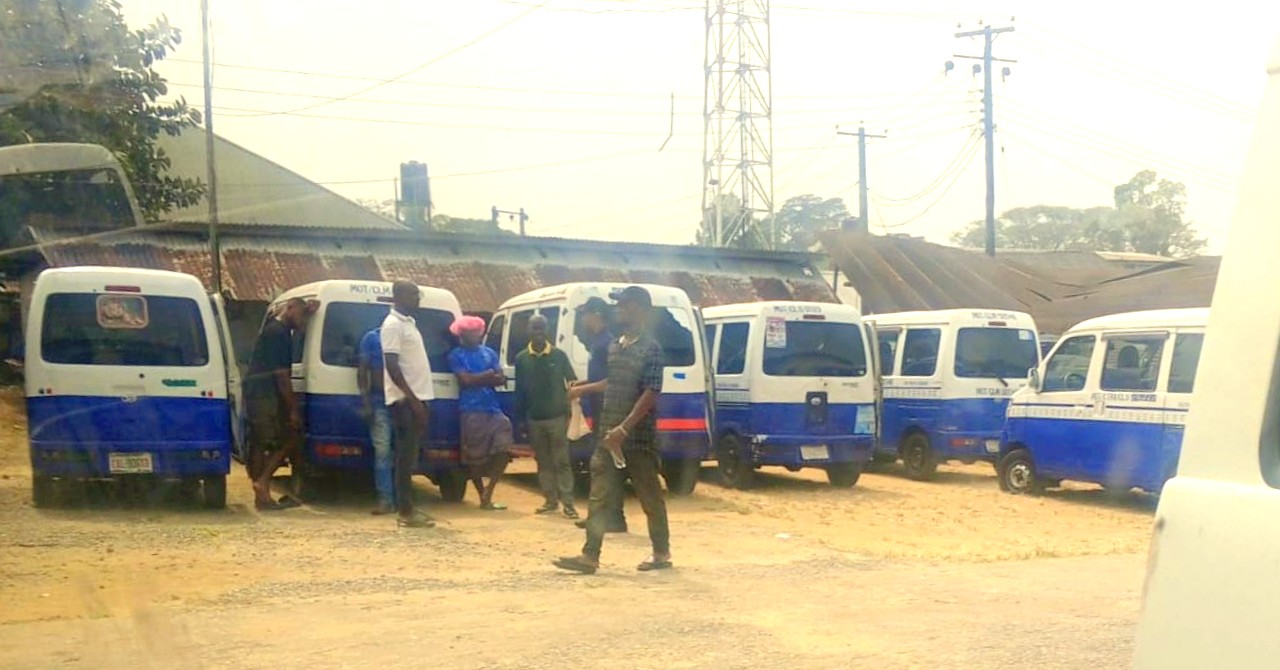
Every morning by 6:AM, as the day begins to unfold, Monday Iyamba, a commercial minibus driver in the 8 Miles area of Calabar, diligently cleans his vehicle and performs routine checks before setting out for his daily work to survive.
Behind this disciplined routine lies deep anxiety that raises blood pressure, not about his driving prowess or vehicle condition, but about the activities of some unscrupulous transport task force teams operating across Calabar’s roads.
Commercial driving in Calabar has become a daily gamble with harassment, extortion, intimidation, and a series of human rights abuses from multiple transport enforcement groups operating under government authority.
“You don’t drive with peace of mind,” he said. “Every morning, you wonder which task force will catch you today and how much they will demand.”
Mr. Iyamba, in his early 50s, said he has been apprehended several times and forced to part with amounts far exceeding his daily earnings, often without receipts or clear explanations of alleged offences.
He recounted one of his bitter ordeals: his vehicle was impounded for allegedly parking in a no-parking zone, even though he had stopped only briefly to pick up a passenger at a regular spot.
According to him, he was still in the driver’s seat, the engine was still running, and passengers were on board when about six men wearing T-shirts marked “Traffic Management and Road Safety Agency (TRAMRA)” surrounded his vehicle and struggled with his car keys.
When he attempted to explain the situation, it escalated. Operatives of a joint security team, “Operation Okwok,” set up by Governor Bassey Otu, were invited, and his vehicle was forcefully taken to TRAMRA’s office.
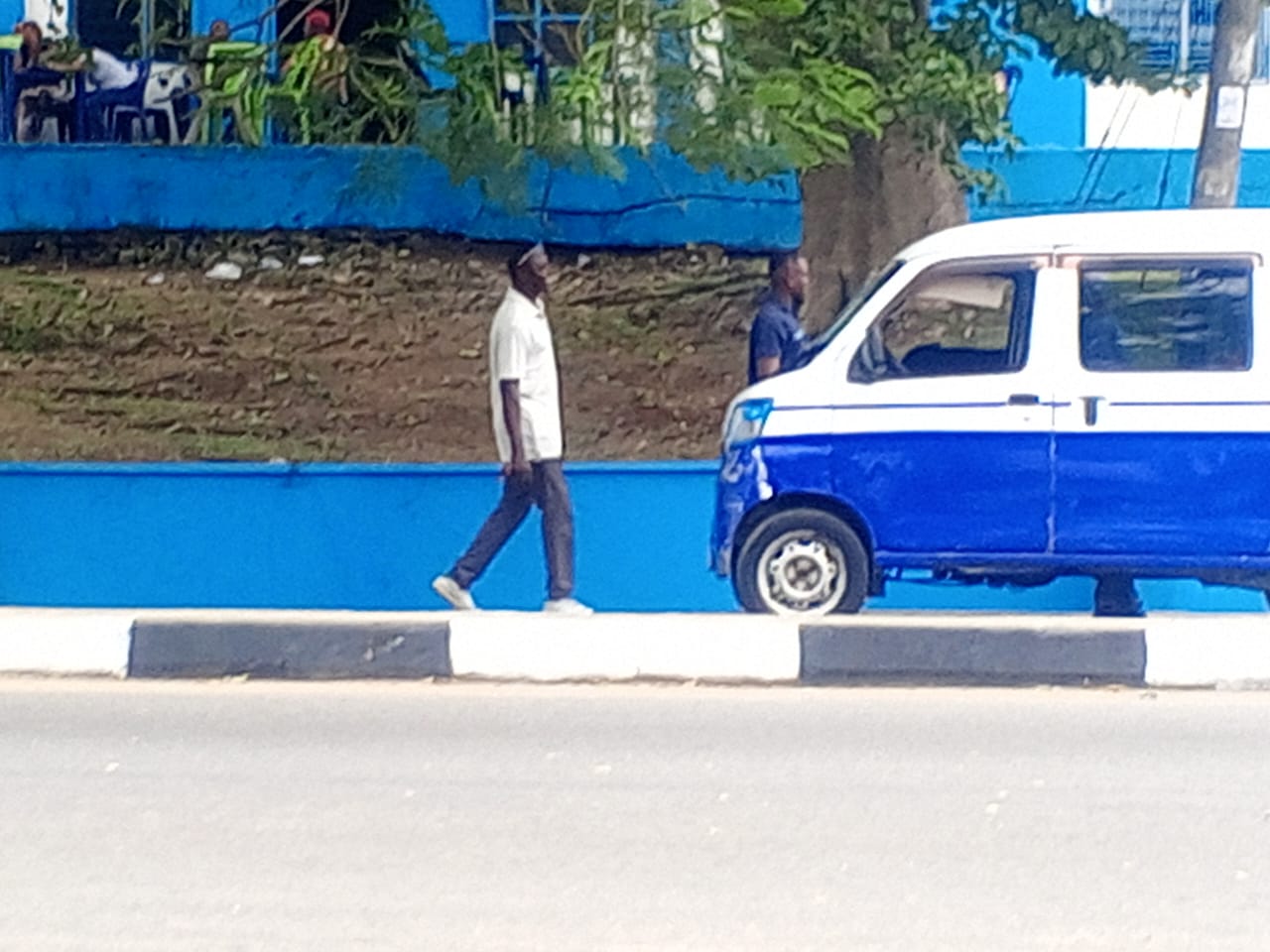
At the office, Iyamba was informed that his fine was ₦16,000, with an additional ₦20,000 added for “arguing,” which led to the invitation of Operation Okwok, and another ₦20,000 was threatened if a towing van had been used.
Once inside the compound, officials searched his vehicle for items such as a fire extinguisher and a jack, and added additional fines for each item they claimed to have found missing.
By the end of the process, he said a driver could pay between ₦70,000 and ₦80,000 before his vehicle is released. All in cash, without receipts or access to any formal charge sheet.
Outside the premises, Iyamba observed a POS operator charging inflated transaction fees, exploiting drivers’ desperation because transfers are disallowed inside the office.
In another bad encounter, Iyamba said his vehicle was impounded by young men described as ticket enforcement agents working for the state government.
He explained that after his vehicle spent the entire day at a mechanic’s workshop, he resumed work at 6:PM only to be accosted at Etta Agbor – one of the busiest roads in Calabar by a group of touts.
The untrained touts forcefully grabbed the steering wheel, seized his keys, and demanded ₦52,000 for failing to buy a ₦700 daily ticket. Meanwhile, ticket sales officially begin at 10:AM and close by 4:PM, yet these groups operate beyond approved hours without restraint or accountability.
He alleged that the state indirectly encourages unemployed youths to form violent enforcement groups that terrorize commercial drivers across Calabar.
Harassment Continues
Mr. Goodnews David recounted a similar experience at Mobil Junction, where TRAMRA operatives summoned Operation Okwok, who dismissed any explanation he offered and focused solely on what they would get when the vehicle was impounded.
For Moses Bassey, his encounter was with the Commercial Transport Regulatory Agency (CTRA), whose task force members accused him of overloading near Watt Market in late 2025.
Bassey told CrossRiverWatch that the problem began after the leader of the untrained team demanded money. Though he obliged and gave him what was offered, the man considered it too small and insulting, prompting his colleagues to surround his vehicle and seize his keys.
When he refused to alight, a towing van was summoned. He said he physically resisted by removing the towing chain, drawing public attention to the scene.
He said the situation de-escalated only after a senior CTRA director arrived and ordered his release after hearing his account.
Emmanuel, another driver, was not as fortunate. His vehicle was impounded because a front-seat passenger was not wearing a seatbelt.
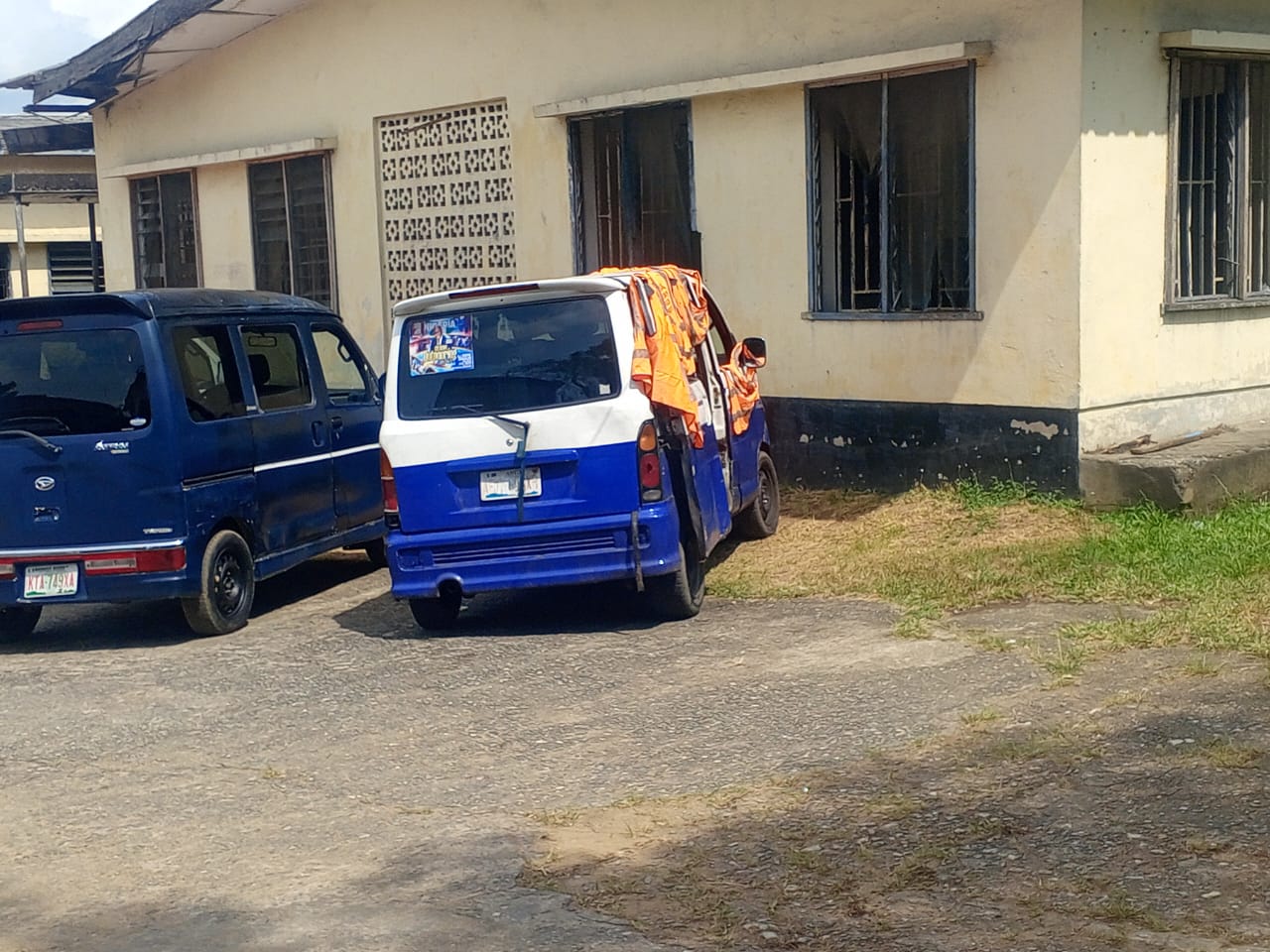
He said the officers demanded ₦10,000 on the spot. When he refused, his vehicle was taken to their office along Marian Road. At the office, his battery was removed, tyres deflated, and he was asked to pay ₦20,000 cash. Without cash on him, he was compelled by the office to withdraw from a Point-of-Sale (POS) terminal. These POS operators within the various taskforce offices are believed to be their agents, stationed to carry out their bidding.
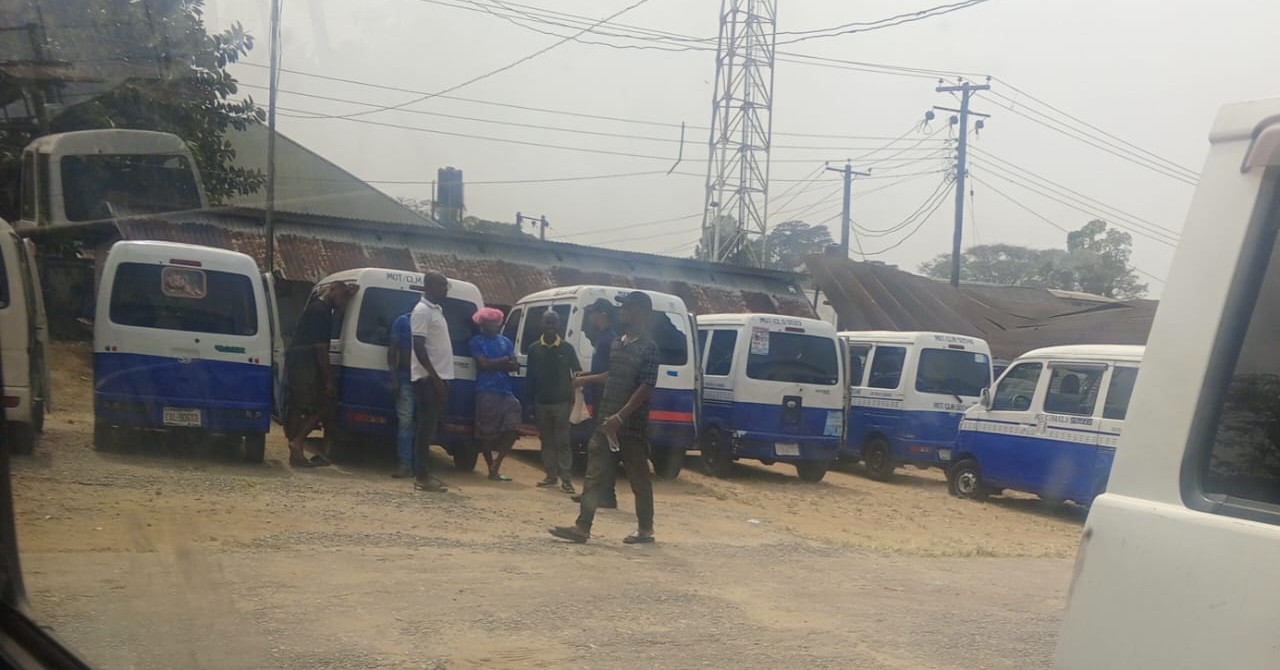
He was required to pay an additional N1,000 to the vulcanizer at the CTRA premises to inflate his tyres. A clerk who released his keys and a gate attendant also received N500 each before their vehicle was allowed to exit.
These experiences have become common in the Calabar metropolis. In 2025, a driver was swimming in the pool of his blood by Marian Market after refusing to surrender his keys to the touts. They fled after the scene gathered momentum. The incident sparked public outrage, yet no known disciplinary action followed, reinforcing public perception of impunity among enforcement groups.
Untrained Team Undergoing Training – Government
Road transport remains the backbone of urban life in Nigeria, influencing economic growth, social inclusion, and public safety across cities.
Despite its importance, the sector remains plagued by weak regulation, poor personnel and user training, and fragmented enforcement structures, undermining its developmental potential.
According to the NBS 2023 Social Statistics Report published in March 2024, between 2020 and 2022, 2,161,782 motor vehicle number plates were registered. While within the same period, 2,370,633 driver’s licenses were processed.
Media estimates suggest only about 30% of Nigerian drivers receive proper training, highlighting a nationwide skills gap that worsens enforcement challenges.
Another critical challenge is enforcement: as states and local governments regulate urban transport, parks, fares, and traffic management, enforcement is often left to poorly trained or informal actors.
In Calabar, multiple agencies, including the Ministry of Transport, CTRA, TRAMRA, VIO, ticket task forces, and officials of local councils, perform overlapping enforcement functions.
Many drivers in the state told CrossRiverWatch that their unions offer little protection, describing them as appendages of government rather than defenders of members’ interests.
The Chairman of the Unified Commercial Drivers Association, Mr. Etta Henshaw, said his union works with CTRA policies and relies on dialogue to address enforcement challenges.
Henshaw acknowledged enforcement difficulties but said stakeholders’ engagements planned for 2026 would help address excesses and improve transparency.
He insisted that apprehended drivers must be shown the documented offences and that ticket enforcement was limited to 10:AM to 5:PM.
Fielding questions about the harassment and abuses by his task force team, the CTRA Chairman, Mr. Efa Nyong, admitted shortcomings but said his men were undergoing training and that offences had been reduced to four major categories.
Nyong stated that fines range from ₦5,000 to ₦10,000 and are outlined in official charge sheets managed by the agency’s enforcement directorate.
Drivers, however, dispute these claims, insisting that real-world enforcement practices differ sharply from official narratives.
Observations at CTRA offices revealed enforcement personnel with aggressive dispositions, some openly displaying symbols linked to clandestine groups.
Behavioral Issues, Lack Of Orientation: The Cause
While the CTRA boss, Nyong, blames the lack of training for his boys, the Commissioner for Transport, Mr. Ekpenyong Cobhams, ties it to behavioural issues among enforcement officers, attributing them to poor upbringing and lack of orientation.
He said the government plans to introduce structured training as resources become available, but admitted complete elimination of misconduct remains difficult.
The Federal Road Safety Corps (FRSC) Sector Commander in Cross River State, Mr. Innocent Etuk, emphasized the need for continuous improvement and unified traffic management standards aligned with international best practices.
Etuk stressed that training must include emotional intelligence, public engagement skills, and a clear understanding of traffic laws.
He described it as preposterous for officers who lack basic traffic knowledge to enforce the law, warning that poor interactions can escalate conflicts rather than ensure safety.
While training state agencies is not mandatory, Etuk said FRSC’s advisory role allows it to promote professionalism and coordination across traffic institutions.
Civil Society Condemns Rascality
Civil society operator Mr. Richard Inoyo described current enforcement methods as deeply flawed and inherently corrupt due to cash-based fine collection.
He said motorists are routinely compelled to pay ₦32,000 fines without receipts or official payment channels, violating financial regulations.
Inoyo bemoans the absence of Closed-Circuit Television (CCTV) cameras, which could monitor both traffic violations and misconduct by enforcement officers.
He condemned the use of forceful methods, including placing objects near tyres and physically interfering with moving vehicles.
During an observatory visit, a senior TRAMRA official (name withheld) privately admitted that many enforcement officers, both in CTRA and TRAMRA, are ad hoc staff paid through shared proceeds from impounded vehicles.
This revenue-sharing arrangement, he told CrossRiverWatch, explains the high fines and aggressive enforcement tactics. It is important to note that effective traffic management must prioritize safety, professionalism, and accountability over revenue generation and patronage.
For a state like Cross River, where cities lack other well-developed means of transportation besides roads, an effective and professional traffic management system is necessary to ensure safety and data collection.
To achieve this, the state needs to replace force-based enforcement with system-based enforcement. In practical terms, this means a mix of professionalisation, technology, clear processes, and public accountability.
A financial expert who pleaded to remain anonymous said all fine payments must be made via a central payment system, as cash collection is where corruption thrives. The expert advised that no officer should handle cash, which in turn protects motorists, officers, and government revenue.
The expert noted that there must be a clear division of roles between agencies to prevent confusion that breeds abuse. Strong oversight and accountability are also needed. Without consequences, bad behaviour continues; a system that punishes misconduct will naturally push out touts and thugs.
From this investigation, CrossRiverWatch observed that effective traffic regulation is not about shouting, force, or fear, but rather about systems, professionalism, and trust. This is because a city that gets this right doesn’t need touts or thugs. Order comes from structure, not intimidation.
This report was produced with support from Civic Media Lab under its Grassroots News Project (GNP).
Short Link:
Leave feedback about this