By Paschal Okwor
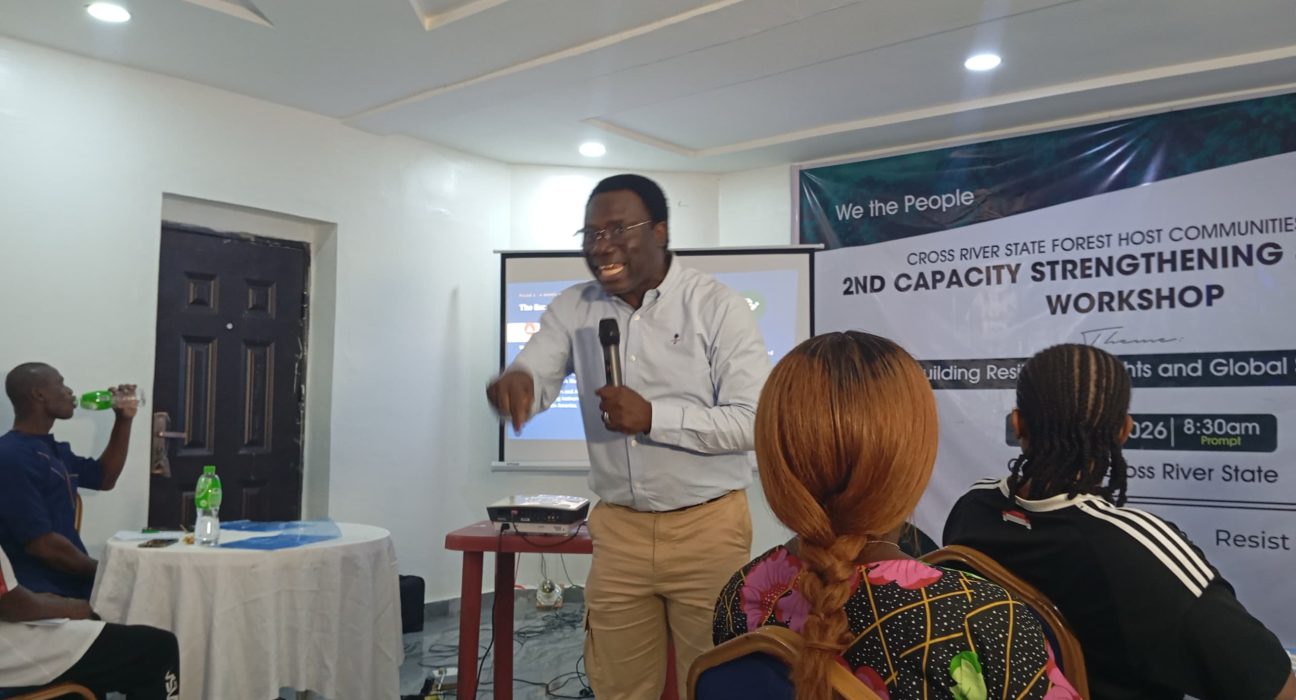
Civil society organization, We The People, has trained members of the Cross River State Forest Host Community Network on forest conservation, indigenous rights and community-led environmental protection to strengthen grassroots efforts at safeguarding the state’s forest ecosystems.
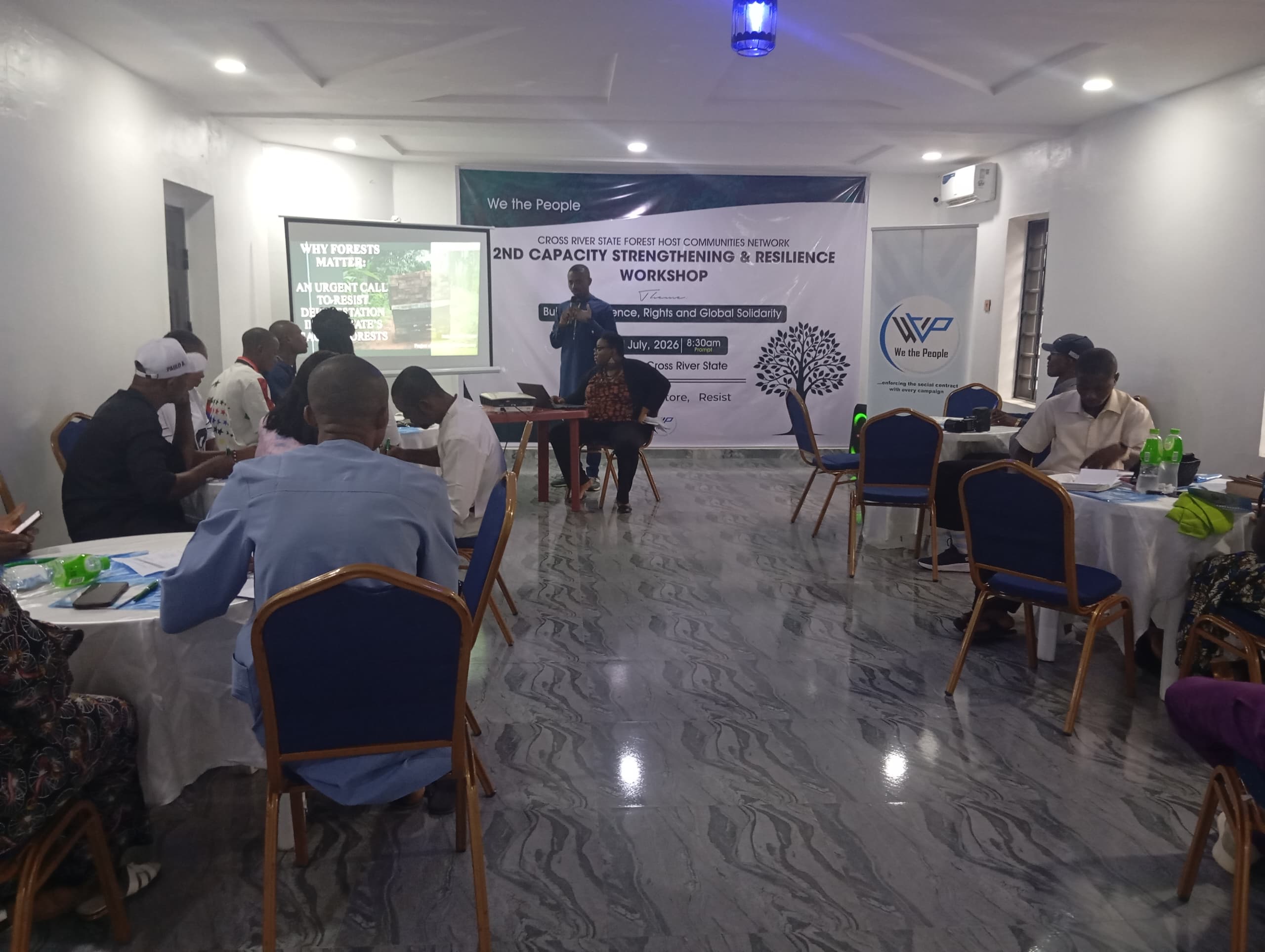
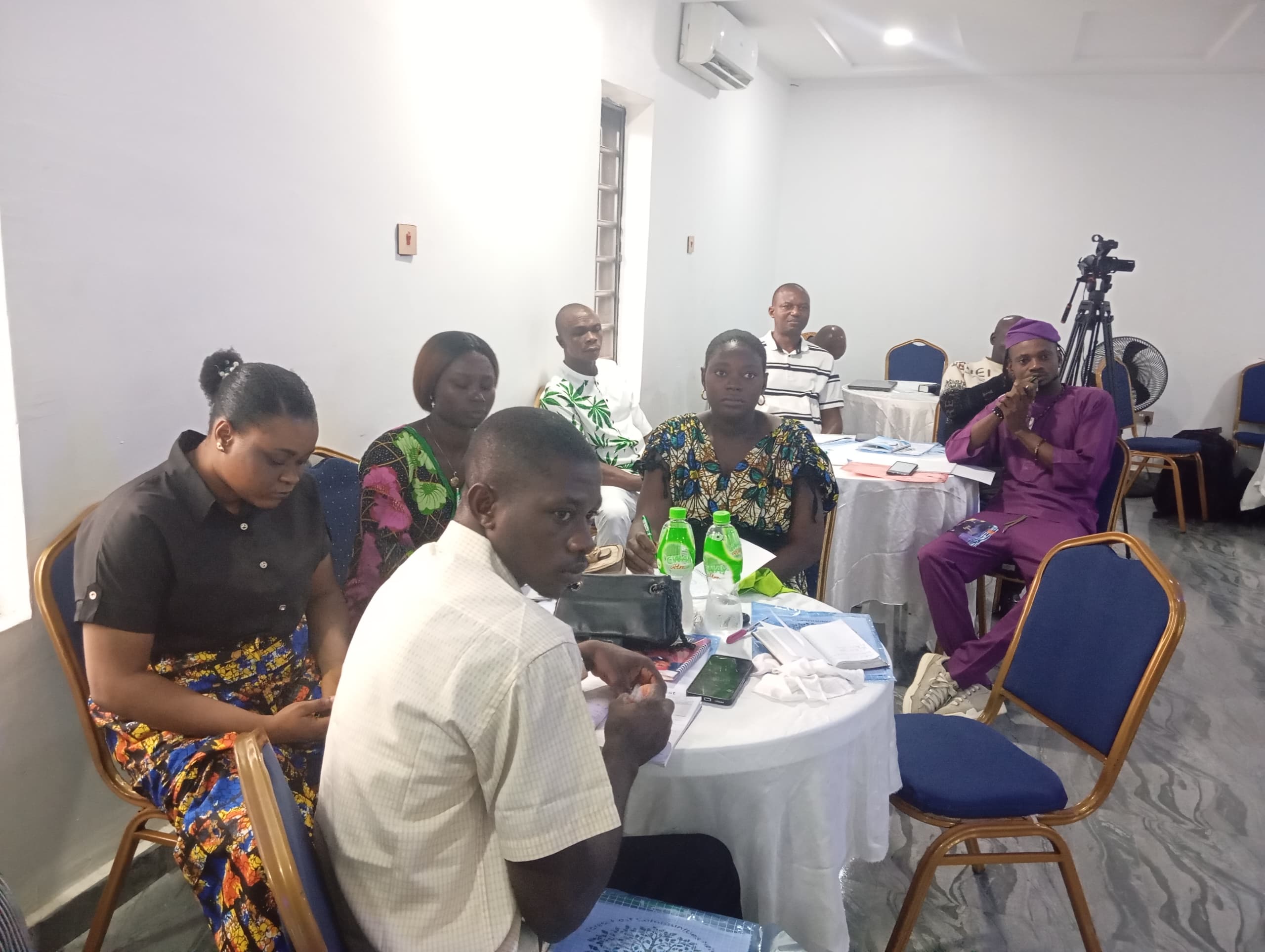
The training held on Thursday, 2nd July, 2026, during the Second Capacity Strengthening and Resilience Workshop, with the theme “Building Resilience, Rights and Global Solidarity,” in Calabar.
The engagement brought together representatives of forest host communities from across Cross River State for presentations, discussions and an interactive question-and-answer session.
Speaking on the ecological importance of forests, the Project Officer on Mining and Forestry at We The People, Nsikak Peter Udofot, challenged the narrative that indigenous communities are responsible for deforestation.
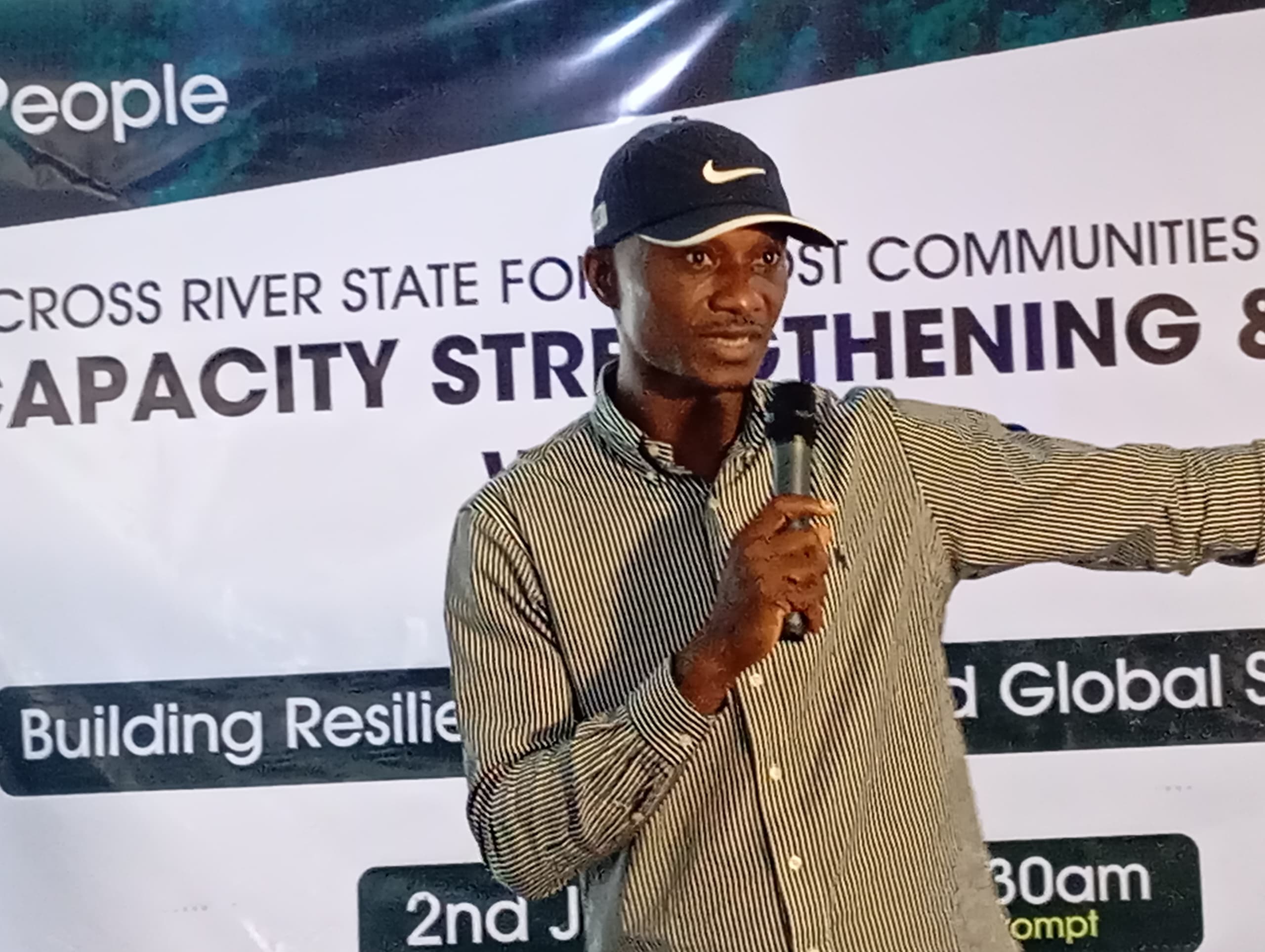
Udofot said large-scale forest destruction is largely driven by external actors rather than host communities, urging participants to reclaim their role as custodians of their ancestral forests.
He described forests as the heritage, identity and cultural inheritance of indigenous communities, stressing that protecting them is essential for preserving livelihoods, biodiversity and future generations.
He stressed on the importance of forests in mitigating climate change through carbon sequestration, explaining that mature trees store carbon accumulated over centuries and that newly planted trees cannot immediately replace the environmental value of those that have been cut down.
According to him, between 25 and 30 per cent of modern medicines are derived from forest resources, underscoring the critical role forests play in healthcare and biodiversity conservation.
Delivering a presentation on “Forest Ownership and Community Rights in Cross River State,” the Executive Director of We The People, Ken Henshaw, said the training was organized to strengthen the capacity of members of the Forest Host Communities Network to organize, mobilize and protect their indigenous forest ecosystems.
He explained that participants were drawn from mangrove, rainforest and other forest communities across the southern, central and northern parts of the state, including Boki, Akamkpa and Ikom.
Henshaw said the initiative seeks to return indigenous communities to the forefront of forest conservation, noting that meaningful environmental protection cannot be achieved without the active participation of the people who have ancestral ties to the land.
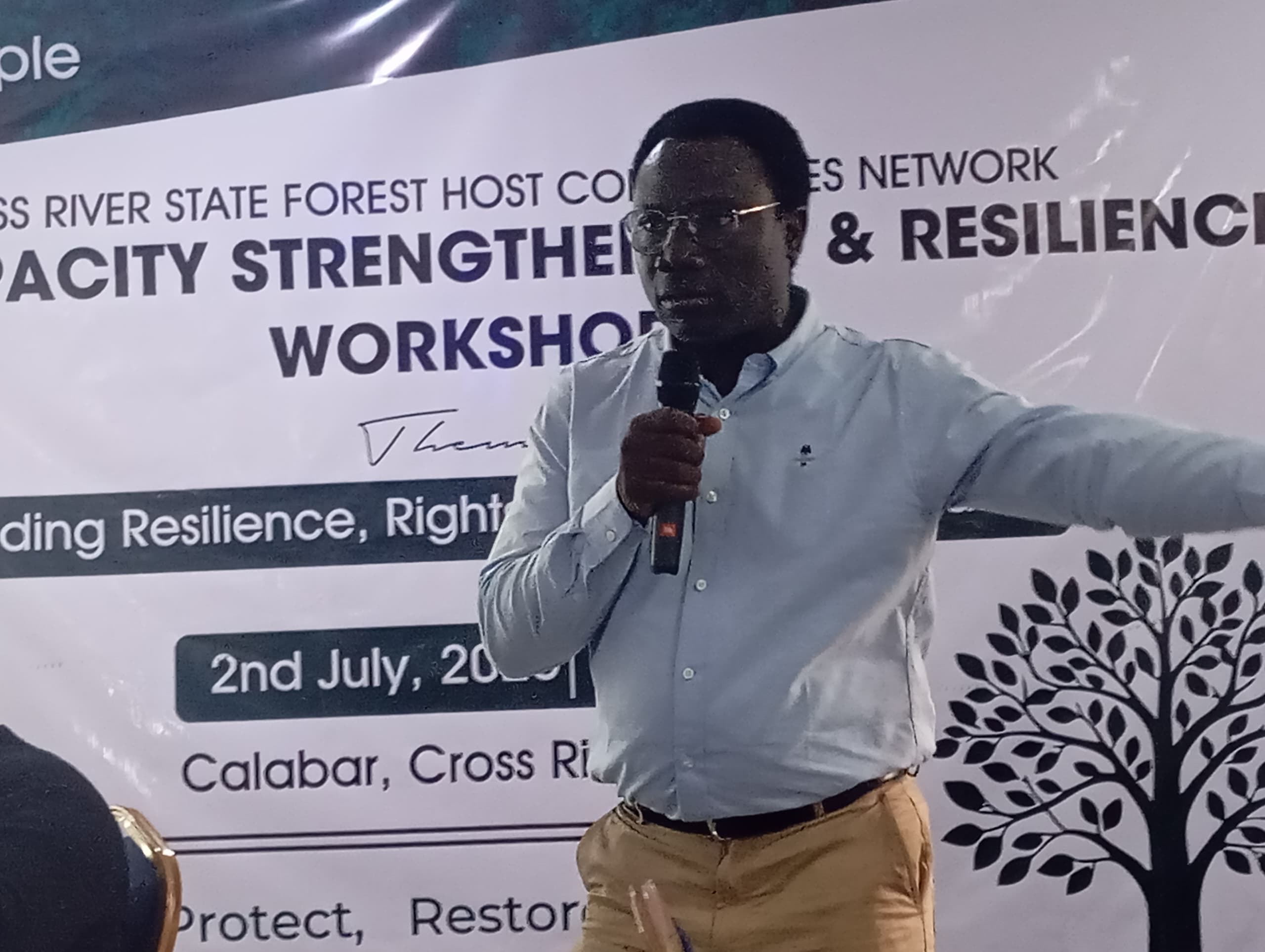
He argued that several government policies introduced to protect Cross River’s forests had not achieved their intended objectives, citing the REDD+ program as an example.
According to him, despite the program’s goal of reducing deforestation and attracting international climate financing, deforestation continued while the expected carbon credit benefits failed to materialize.
He therefore advocated renewed support for indigenous conservation practices and greater community involvement in shaping forest protection policies.
Also speaking, the State President/Coordinator of the Forest Host Community Network, Carlos Akpet, described the rate of deforestation in Cross River State as alarming and called for stronger community action to reverse the trend.
Akpet said the workshop was designed to move conservation efforts beyond dialogue by developing a practical action plan that would guide community engagement across the state.
He explained that the plan would mobilize youths, women, traditional rulers and other community leaders to champion forest conservation initiatives at the grassroots.
The workshop ended with participants reaffirming their commitment to promoting indigenous rights, strengthening community resilience and advancing community-led efforts to protect Cross River State’s forests.
Short Link:
Leave feedback about this