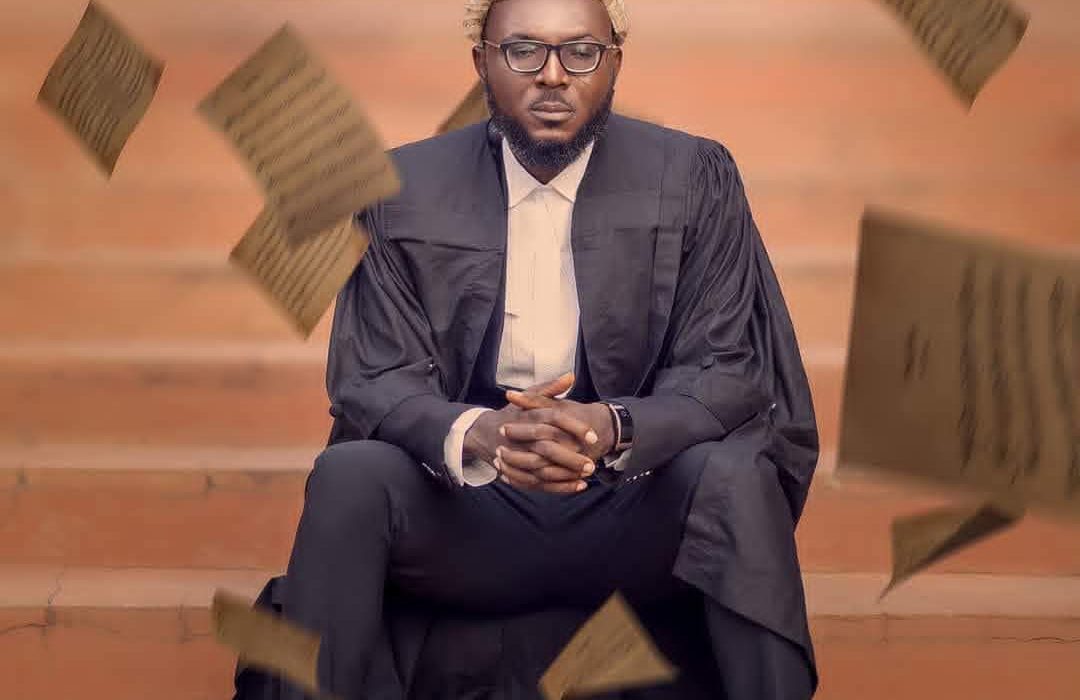
By F. Baba Isa Esq
At a time when police officers in many jurisdictions are being required to wear body cameras while discharging their duties, it is rather unfortunate that our Inspector-General of Police appears to be linking the low morale of his men to members of the public recording them while they perform their duties.
What, exactly, is demoralising about being recorded while discharging a public duty? I honestly do not understand.
I think the more important question is: what are they afraid of being recorded doing?
Apart from the fact that members of the public have a right to record police officers in the discharge of their public duties, a position that has now been reinforced by a decision of the court, recording police officers has not stopped them from carrying out their lawful responsibilities. If anything, it has simply shone a light on some of the illegalities and abuses that occasionally occur in the course of policing.
A police officer who is doing the right thing should have no reason to be concerned about being recorded.
The IGP, however, also raised another important question: Why are judges not recorded in open court?
I have seen lawyers attempting to defend this position and justify why judges should not be recorded while discharging their duties in open court. I do not agree with them.
I raised this same question when my brother, Inibehe Effiong, was sent to prison for contempt by the Chief Judge of Akwa Ibom State.
READ: Inibehe Effiong
This is what I wrote at the time:
“This case of Inibehe Effiong is bringing a lot of things to the fore, a lot of things wrong with our justice system. Today, I will point out one:
Why do judges always take offense when court proceedings are being recorded? I challenge any lawyer, judge or scholar to point me to a provision of the law or rule that prohibits litigants, lawyers, journalists or members of the public from videoing or recording court proceedings in Nigeria (apart from juvenile proceedings and perhaps proceedings where restrictions have been specifically imposed).
In fact, the Constitution provides that court proceedings must be held in public. Why, therefore, do judges try to keep secret what is meant for the public?
Inibehe’s purported contempt case might tell us why.
The Chief Judge of Akwa Ibom State released the record of proceedings in the case in which she jailed the lawyer for contempt of court. Have you considered the irony this situation presents? This contempt case is between Inibehe and the Chief Judge, yet the only record the public and the Court of Appeal can rely upon to determine what really transpired is the record produced by the Chief Judge herself!
Yes, I know that the record of proceedings can be legally challenged and impugned, but all this drama would have been unnecessary if the proceedings had been recorded by journalists and members of the public.
How can we know the truth of what transpired in court by depending solely on the record of the judge, who is now a party to the whole saga?
This continuous barring of members of the public from recording court proceedings has absolutely no positive side.
Those who argue that allowing anyone who wants to record court proceedings to do so would promote transparency and help to curb corruption and abuse of office on the bench have a salient point.
I have read the record of proceedings, and the judge wants me to believe that Inibehe, or any lawyer for that matter, would bang the table, shout at a judge and say, ‘I will not continue…’?
Hmmm. Maybe it is true. Maybe Ini smoked something that day. But now that the Chief Judge is both the offended party and the judge, forgive me if I refuse to take her word alone, as contained in the record of proceedings, as the final word on what happened.
Again, you see, this is where it would have been great to have allowed that Premium Times journalist whom she sent out of the courtroom to record the proceedings. But she sent him out and now wants us to believe her version of events as contained in the record of proceedings.
As I said earlier, I know certainly that the record of proceedings will be challenged. But even as it stands, the record shows manifest irregularities and patent lacunae. The proper procedure for contempt in facie curiae was not followed. From where I stand, the conviction for contempt is void.
In closing, we have to go back to the initial question: Why are judges so uncomfortable with court proceedings being recorded? What is going on?”
I remain persuaded by the fundamental question I raised then.
In the final analysis, I submit that both police officers and judges should, as a general rule, be freely recorded by members of the public while discharging their public duties, subject only to legitimate and narrowly defined exceptions.
Transparency should not demoralise a public officer who is doing the right thing. Accountability should not be regarded as an attack on authority.
And the mere presence of a camera should not make anyone uncomfortable unless there is something about the conduct being recorded that they would rather the public did not see.
If police officers are expected to wear body cameras to record their interactions with members of the public, why should members of the public be prohibited from recording those same interactions?
If court proceedings are conducted in public, why should the public be prevented from creating an independent record of what occurs in an open courtroom?
The camera does not create the misconduct. It merely records it.
And where public officers are performing public functions, sunlight is rarely the enemy.
Quod erat demonstrandum.
First Baba Isa, Esq., LLB, BL, LLM, MBA, FIMC, CMC, is a PhD candidate researching the topic: “Evaluating the use of technology and its legal implications to elections in Nigeria.” He writes in from Abuja, the Federal Capital Territory.
NB: Opinions expressed in this sponsored article are strictly attributable to the author, F. Baba Isa, and do not represent the opinion of CrossRiverWatch.
Short Link:
Leave feedback about this