By Godwin Ajom
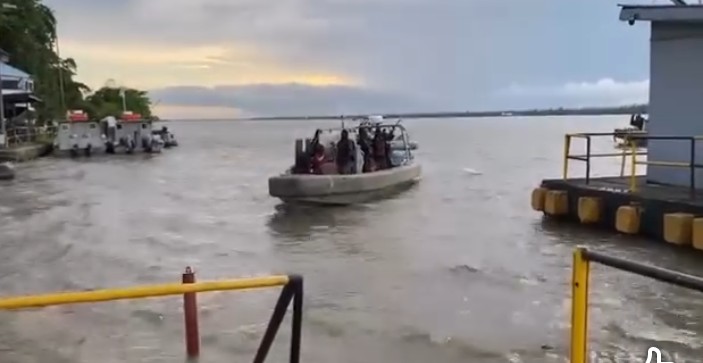
The shadow of insecurity hanging over the Calabar-Oron waterways deepened on Friday, April 17, 2026, when suspected kidnappers abducted 15 passengers traveling by boat from Calabar, Cross River State, to Oron in Akwa Ibom State.
Among the victims were candidates of the Joint Admissions and Matriculation Board (JAMB), young Nigerians whose journey should have been filled with hopes of higher education and brighter futures. Instead, their dreams were abruptly interrupted by a frightening encounter with sea pirates armed to the teeth.
The incident came barely two days after another kidnapping involving eight JAMB candidates in Benue State on Wednesday, April 16, 2026, raising fresh concerns about the safety of students and travelers across the country.
For families awaiting the arrival of their children and loved ones, the news triggered anxiety, fear and uncertainty. What should have been a routine journey across the waterways to Akwa Ibom State became yet another reminder of the growing insecurity confronting ordinary Nigerians.
April 18, 2025, just 24 hours before Easter. As families across Nigeria prepared to celebrate the resurrection season, a cloud of fear and uncertainty descended on the family of Mary Uwem, a young, unemployed graduate in her twenties.
That day, Mary received a phone call through her younger sister’s phone. What began as an ordinary call quickly became the start of a nightmare.
On the other end of the line was a man whose voice was cold, firm, and unmistakably threatening. He informed Mary, a roadside Point of Sale (POS) operator in Calabar, the Cross River State capital, that her mother, younger sister, and cousin, along with 11 other passengers, had been kidnapped.
In an instant, the joy of the Easter season vanished. For Mary, it felt as though darkness had suddenly swallowed the daylight.
Her mother, Mrs. Uwem, her younger daughter, and a niece (names withheld) had boarded one of the two passenger boats traveling from Oron to Calabar via the waterways on Easter Eve. They were looking forward to spending the holiday with family in Calabar.
Instead, their journey turned into a terrifying encounter with armed men of the underworld on the sea pirates.
According to accounts from survivors, heavily armed and masked men intercepted the boat, firing sporadically into the air and surrounding the boat. The attackers, wielding AK-47 rifles and other weapons, threatened passengers and warned them against any attempt to resist. “Shut up, face down!” their captors ordered.
Victims later recalled that the sound of gunfire alone was enough to leave passengers trembling with fear. Some said the terror was so overwhelming that many lost control of themselves.
Ordinarily, the journey from Oron to Calabar by water takes about 45 minutes. On that day, however, it felt much longer; a frightening voyage that many survivors describe as a journey through hell.
Back in Calabar, Mary waited anxiously for her family to arrive. Expecting them within the usual travel time, she hurried to the beach to welcome them. But as the minutes stretched into hours, there was no sign of their boat. Their phones were unreachable. Calls went unanswered. Confusion and anxiety quickly gave way to fear. The horrifying truth emerged only when the second boat eventually arrived.
Passengers who escaped the attack stepped ashore, overwhelmed with emotion. Cries of “Thank you, Jesus!”, “Thank you, Lord!” and “Oh Jesus!” filled the air as survivors and well-wishers struggled to process what had happened.
READ: How Company’s Hazardous Quarry Activities Risk Community’s Health, Farmland In Ogun State
It was from them that Mary learned the devastating news that her family had been abducted and whisked away by sea pirates along the Calabar-Oron water route.
The news left her numb. She could neither cry nor speak. Her mind froze under the weight of uncertainty. There was no immediate help. No comforting words from authorities. No visible security response. Like many relatives of kidnapping victims, Mary suddenly found herself carrying a burden she neither expected nor knew how to bear. She now faced the daunting task of securing the freedom of her mother, sister, and cousin. Hours later, another call came.
This time, it was a ransom demand. The male voice confidently told the young POS operator, “We (the kidnappers) want ₦3 million ransom from you, before we can free this woman, or else you will never set your eyes ever again on your mother and siblings.”
Mary was not alone. Similar calls were placed to the families of other victims. In all, 14 travellers were abducted in the operation, raising serious concerns about security along the waterways that connect Cross River and Akwa Ibom States.
For the victims’ families, Easter 2025 became less a season of celebration and more a desperate struggle to bring their loved ones home alive.
Former Attorney General’s Encounter With Waterways Kidnappers
Barely five months after the Easter 2025 kidnapping incident, another frightening attack on the Calabar-Oron waterways would reinforce growing fears about safety along one of the region’s busiest transport routes.
It was the morning of September 15, 2025. Like many other travelers seeking to avoid the deplorable state of the Calabar-Itu road linking Cross River and Akwa Ibom States, former Cross River State Attorney General, Barr. Eyo Ekpo arrived at the Calabar waterfront for what was supposed to be a routine trip to Oron.
The atmosphere was calm. Passengers boarded the ferry with little reason to suspect that danger was lurking ahead. Among the more than 20 passengers onboard were a serving police officer and his sibling. The journey had barely begun when it took a terrifying turn.
About fifteen minutes after departing Calabar, another boat carrying heavily armed men intercepted their boat in the middle of the river channel. The attackers immediately took control of the situation, ordering passengers to remain silent while they carefully selected those they intended to abduct.
For the passengers, what had begun as a normal journey quickly became a scene of fear and uncertainty. Recalling the incident, Barr. Ekpo told CrossRiverWatch:
“We had barely left Calabar and about 15 minutes into the journey, when the event happened, I turned to look back and still seeing Calabar South. And anybody who knows this area down the Calabar River, once you pass Calabar south, there’s a partway where there’s usually a Nigerian Navy patrol craft that stations at the junction, as surveillance on the waterway but on that day, it wasn’t there. And they carried the victims towards that part where the Navy boat was usually stationed.”
According to the former Attorney General, the absence of the Navy patrol craft at its usual surveillance position on the day of the attack may have created an opportunity for the kidnappers to operate unhindered.
His account also challenges repeated claims that most kidnapping incidents occur only within the waters of neighboring Akwa Ibom State.
Addressing that narrative, he insisted: ”So, I am telling you that I, the former Attorney General of the State, was in that boat that day, this is not a fabricated story, we were headed to Oron from Calabar, for a very simple reason, which is because the road is bad. And because of that I had not used the road for close to a decade because the road is bad.
“Now, those people that were kidnapped were in that horrible experience for 11 whole days. They stayed in the hands of their abductors for 11 days.”
The victims selected by the gunmen remained in captivity for nearly two weeks, enduring uncertainty, fear and separation from their families. When asked whether ransom was paid for their release, Barr. Ekpo said: “I don’t know anything about ransoms, but I know it was 11 days before they were freed. It is wrong and irresponsible to blame it on Akwa-Ibom. My bad kidnap experience happened within Calabar city within the Calabar River channel.”
Beyond the individual stories of survival, intelligence sources familiar with activities along the waterways suggest that many of the armed groups responsible for these attacks operate from the extensive creek networks linking Bayelsa, Rivers and Akwa Ibom States.
One source explained: “The Governments of Cross River State, Rivers, Bayelsa and Akwa-Ibom States usually have settlement plans in the guise of (amnesty programs) for some of them (the militants/bad boys/hoodlums), but there seems to be a little unstable relationship about settlement plans between the Rivers and Bayelsa State axis, hence the boys now comb through to the Calabar creeks and strike.”
Another source, speaking on efforts to trace those behind the Easter 2025 kidnapping, revealed: “In fact, the eve of Easter 2025 kidnapping operation, took some effort to locate the perpetrators; it took sources from the Ibaka axis of Akwa Ibom State, to provide intel, before it was clear that the gang that struck was from the Bayelsa-Rivers axis.”
However, questions persist about how ransom payments are made and whether local collaborators help facilitate the process. One former victim, speaking emotionally, said, “The ransom was paid through Ikot Nakanda.”
Navy Arrests Suspected Militants Collaborator In Cross River
The rural community is located a short distance from Calabar. The victim further lamented that the transaction occurred “just beside the nose of Governor Bassey Edet Otu, what a disrespect”.
For many survivors and their families, identifying the kidnappers is only part of the puzzle. The bigger concern, they say, is whether people within the system know who these criminals are and where they operate.
The recurring nature of the attacks has fueled speculation among stakeholders in the maritime transport sector. Some pointed fingers at “a top Government official” whose identity they declined to reveal, alleging that the official “put calls across” that eventually contributed to the release of some victims.
A review of incidents between 2025 and 2026 suggests a disturbing pattern of insecurity along the Cross River-Akwa Ibom waterways.
Among the notable cases was the April 18, 2025, abduction of 14 passengers, during which victims reportedly paid a combined ransom of ₦42 million. This was followed by the September 25, 2025, attack in which Barr. Eyo Ekpo escaped while 15 passengers were abducted. There was also the January 16, 2026, kidnapping operation, as well as the widely reported abduction of students travelling to sit for the 2026 Joint Admission and Matriculation Board (JAMB) examination.
While details surrounding some of these cases remain unclear, together they paint a troubling picture of a waterway corridor increasingly associated with fear, ransom negotiations, and recurring kidnappings.
Kidnappers Having A Good Time
For many victims, freedom came at a painful cost. After spending days in captivity under the watch of heavily armed abductors, survivors returned home carrying more than just memories of their ordeal. Many came back physically weakened, emotionally drained, and deeply traumatized.
Some victims spent about ten days in captivity, where they were subjected to harsh treatment, intimidation, and torture. Upon their release, several required medical attention and were forced to spend heavily on medications, nutritional supplements, and special diets to regain their strength.
RELATED: Inside Eburutu Barracks: The Hidden System Of Forced Labour On Civilians In Cross River
Beyond the physical wounds, the psychological scars remain. Interviews conducted by CrossRiverWatch reveal that many survivors continue to live in fear long after regaining their freedom. For some, the trauma resurfaces whenever they hear a boat engine, an unfamiliar phone call or discussions about travelling through the waterways.
Several victims told CrossRiverWatch that they were “warned not to talk about it”. The warning extended beyond the details of their captivity to include the amount paid as ransom, when the payments were made and where the money was delivered to their abductors.
Out of concern for their safety and privacy, most victims requested anonymity. However, some of them, mainly traders and small business owners, disclosed that they were forced to raise various sums before securing their release. According to them, ransom payments ranged from ₦500,000 to ₦1 million and, in some cases, up to ₦1.5 million, depending largely on the perceived financial capacity of each victim’s family.
CrossRiverWatch gathered that during the April 2025 kidnapping incident involving 14 passengers, a total ransom of approximately ₦42 million was eventually paid. The payments were reportedly made after weeks of pressure, fear and repeated threats from the kidnappers.
Sources familiar with the negotiations said families were left with little choice as they struggled desperately to save the lives of their loved ones. Similarly, a source close to one of the victims of the January 16, 2026 kidnapping incident confirmed that “They have been freed, they paid a ransom of ₦18 million.” The source explained that the abduction occurred along the Oron waterways before the victims crossed into Cross River State waters.
Some Ransom Must Be Paid For Victims’ Safety – Top Security Official
The growing reliance on ransom payments presents a troubling contradiction. While kidnapping victims and their families often view ransom as the only path to survival, Nigerian law expressly prohibits such payments. Section 14 of Nigeria’s Terrorism Act 2013, as amended in 2022, criminalizes the payment of ransom to kidnappers and terrorists.
“Anyone who transfers funds, makes payment or colludes with an abductor, kidnapper or terrorist to receive any ransom for the release of any person who has been wrongfully confined, imprisoned or kidnapped is guilty of a felony and is liable on conviction to a term of imprisonment of not less than 15 years,” the Act spelled.
Despite the legal position, realities on the ground appear far more complicated. A senior security source who spoke to CrossRiverWatch on condition of anonymity argued that in certain situations, ransom payments are necessary to preserve victims’ lives.
According to the official, “Some of the ransom must be paid because if they want to go without paying, some of the victims might be hurt. If they’ve succeeded in taking them from the sea, we would allow them, but after the ransom, would the kidnappers still be alive to collect more ransom? One or two ransom would be paid, because if we approach the scene when the victim is with them, the victims won’t be safe; because we come through land, sea, and air, we have the capacity,’ the government official said.
The statement highlights the difficult choices often faced by families and security agencies during kidnapping incidents. For relatives trapped between the law and the fear of losing loved ones, the decision is rarely straightforward. While ransom payments may secure a victim’s release, they also risk sustaining a criminal enterprise that continues to thrive across Nigeria’s waterways and communities.
As long as kidnappers continue to profit from abductions, observers warn that the cycle of fear, negotiation, and ransom payments may remain difficult to break.
Is Kidnapping Real In Cross River State?
Despite official denials in some quarters, kidnapping along the waterways connecting Cross River and neighbouring states has become a persistent concern that residents say can no longer be ignored or dismissed as political exaggeration.
While government officials insist the situation is under control, a political appointee who spoke on condition of anonymity acknowledged that “occasionally, these issues occur particularly on the waterways.”
However, the same source quickly added that “every society has these issues, but it depends on the frequency of your proactiveness.”
Since assuming office, the administration of Governor Bassey Otu has, on at least two occasions, reportedly received individuals described by state officials as kidnappers who “came out of the waters” to surrender their arms.
In November 2025, the Cross River State Government also announced the graduation of about 80 ex-militants. According to officials, the beneficiaries “were sent back to their various states”, suggesting that many were not indigenous to the Cross River.
In a similar exercise, another group of about 250 militants was reportedly “sent to Nasarawa for training, empowered them, and sent them out.”
Some security operatives argue that these interventions are yielding results. One of them stated, “We are getting results. If you check, there’s no country in the world that is insecurity-free, not even America.’
FURTHER READ: The Missing Road: How FG Paid N556 Million For A Project That Doesn’t Exist
But not everyone agrees that such measures are sustainable. The Country Director of Citizens Solution Network, Richard Inoyo, warned that current approaches may not address the root of the problem.
“And then there’s this method that we’ve also seen where the government gives certain amounts of payment in an attempt to prevent the people from committing the crime of kidnapping. All these methods aren’t sustainable,” he emphasized.
The Secrecy Of Cross River’s Security Vote
At the center of the security debate is the issue of the state’s security vote – a monthly allocation given to state governments in Nigeria to improve their security architecture, often without public disclosure, intended to fund security operations.
Across the country, security votes run into billions of Naira annually, varying depending on perceived security challenges in each state.
Cross River State, for instance, is reported to receive about N500 million every month, amounting to approximately N6 billion yearly.
The Special Adviser to Governor Bassey Otu on Surveillance and Operations, Augustine Wonor, defended the administration’s use of the funds, crediting them for strengthening security architecture in the state.
He said the security vote has contributed to the establishment of Operation Okwok; a joint security task force involving the Navy, Police, DSS, and NSCDC.
“On the security vote, the Governor has done very well. He’s trying because without the security vote, we won’t get what we call Operation Okwok, comprising the Army, DSS, the NSCDC, which are the three strike teams, under the state security adviser, provided with over a hundred security trucks for operations. Whatever is due he has been giving to us.”
However, the Special Adviser firmly rejected claims that kidnappings occurred within Cross River territory in some of the reported cases, insisting “the kidnappings in April last year (2025), were on the Akwa-Ibom state waterways not at the Cross River State waterways.”
He argued that the perpetrators were not operating from within the state.
“The kidnappers aren’t currently in Cross River State, else we would have caught and prosecuted them. The Governor warned them, so they’ve all fled the state. Akwa-Ibom and Cross River share waterways, most times these kidnappings happen on the shores of Akwa-Ibom,” he alleged.
He continued: “Once, the Akwa-Ibom State Security Adviser came to us and complained that we have chased them to his end, and we maintain that if they come here, we’ll chase them back.”
But this position sharply contrasts with testimonies from victims and residents who insist that Cross River is increasingly becoming unsafe.
Adding another layer, an insider at the Government House told CrossRiverWatch that the exact amount received as a security vote is not publicly disclosed or independently verified.
The source explained: “There has been no disclosure in respect to the security vote, not in Lagos, not in Abuja, or any state, as to the government telling you how much they get from the security vote and how they spend it. All the security agencies in Cross River have been able to provide operational vehicles through the security votes, but no State government can tell you how much they get and how it’s been used. I cannot tell you how much we get. That’s why it’s a security vote.”
Beyond the controversy surrounding funding and accountability, a larger question remains unresolved: what more can the police and other security agencies do to effectively curb the growing menace of kidnapping along the Cross River waterways and surrounding corridors?
Police Blame Boat Riders For Non-Adherence To Security Rules
The Cross River State Command of the Nigeria Police Force has attributed recent kidnapping incidents on the waterways to what it described as the failure of boat operators to comply with established security protocols.
The Police Public Relations Officer (PPRO), ASP Eitokpah Sunday Akata, made this known in an interview with CrossRiverWatch.
According to him, many of the incidents could have been avoided if boat riders adhered strictly to safety guidelines and approved travel schedules.
He maintained that the police, alongside other security agencies, have made progress in tackling crime in the state, even though he did not deny that kidnappings have occurred in recent times.
“Compared to other states, Cross River is down the chain on kidnappings due to the collaboration between the Nigerian Police Force, the government, and sister agencies. The few cases we’ve had between last year and now have happened due to non-adherence to security directives. Thanks to God, the victims were rescued.
“What happened was that they took an unauthorized part on the waterways and stayed on the sea beyond the travel time. Because there is a rule that no boat should be on the waters beyond 6 o’clock in the evening. Apart from the security guard boats, all commercial boats are not allowed on the waters beyond 6 pm every day,” the PPRO said.
While acknowledging that residents have been affected by kidnappings, the police spokesperson noted that jurisdictional limitations restrict his ability to comment on certain cases, particularly those that occur outside Cross River State.
Navy’s Efforts Not Enough, Empower Us To Secure The Waterways – Boat Riders Association
For those whose livelihoods depend on the Calabar-Oron waterways, the threat of kidnapping is more than a security concern – it is a daily reality that has disrupted businesses, frightened passengers and weakened confidence in water transportation.
The Boat Riders Association in Calabar, acknowledge that kidnappings have become a recurring challenge along the waterways. While they commend the efforts of the Nigerian Navy, they insist that the current security arrangement is insufficient to effectively tackle the growing threat.
The Association called on government authorities to establish a more robust and coordinated security framework, involving multiple security agencies with a permanent presence on the waterways.
Speaking on behalf of the Association, the Beach Master of Safe Journey Beach, Calabar, Mr. Ephraim Aniefiok Okon, said the persistent attacks have significantly affected business activities.
According to him, fear of kidnapping has led to a sharp decline in passenger traffic and boat operations.
He disclosed that where operators previously recorded as many as eight boat departures daily, the number has dropped to about five, as many travelers now avoid the route out of fear.
For operators and passengers alike, every successful attack further erodes public confidence in water transportation and threatens the economic activities that depend on it.
Mr. Okon argued that securing the waterways requires a more coordinated response than what currently exists.
“Let the Navy give us approval to get boys that can secure the waterways for us. If the government gives us the permission, we can secure the waterways. But for now, only the Navy can not do the job. They should merge the Amphibious personnel, the Navy and the Police to form a joint team to always comb the waterways.”
The appeal reflects growing frustration among stakeholders like the Association, who believe that a joint task force involving the Navy, Amphibious Police, Army, Air Force, and other security personnel could provide stronger surveillance and faster responses to criminal activities along the waterways.
Victims And Families Struggle With Post-Kidnapping Trauma And Ill Health
Beyond official statements and security explanations, victims and their families continue to bear the long-term consequences of kidnapping incidents.
Many survivors describe experiences marked not only by physical abuse but also by deep emotional trauma. Families, in their desperate efforts to secure the release of their loved ones, often deplete savings, shut down businesses, and, in many cases, fall into debt.
ALSO: How Cross River Transport Agencies’ Untrained Touts Squeeze Drivers Dry To Meet Targets
One survivor of the April 18, 2025, kidnapping, who preferred anonymity, said she is slowly trying to rebuild her life.
“I can’t tell again, I am just managing, so long as I can get food to eat, I am okay.” She added, “The truth is, I was traumatized, I am just able to be this lively because we came out alive.”
For Barrister Eyo Ekpo, who witnessed the September 15 kidnapping incident, the psychological impact remains profound.
He said, “It’s a very traumatic experience for anybody who has been a victim of kidnapping.
“For those 11 days, I could not sleep, because my mind was constantly thinking of the fate of those who were taken. Though I don’t know any of them, they’re human beings like myself, and unfortunately, they were caught up in the web of such a horrible experience.”
For Mr. Sunday Emori, the challenges go beyond personal trauma to the broader impact on livelihoods and commerce.
He argued that doing business via the waterways has become increasingly risky and unsustainable.
“How do you convey your goods from Calabar to Ikang market and sell? How do you convey your goods from the central Cross River down to the Calabar area?” he questioned.
He also criticized government performance, particularly regarding security funding.
“But when it is time to collect the security vote, they will not tell you it’s everybody’s business. The reason why I’m saying this is because it is the number one responsibility of the government to secure its citizens, secure businesses, and to secure properties across the state.”
Kidnapping Affects Businesses And Impedes Development
Stakeholders warn that persistent insecurity is not only a social problem but also a serious economic threat.
Community development expert and chief host of the Bakassi Fishing Festival, Edima Frank, said kidnapping in the state is an undeniable reality that requires urgent and decisive action.
She noted that many fishing communities have been forced to alter their trade routes due to fear of attacks.
“Most of the fisher folks in Bakassi brings their fishing products to the Bakassi, which use to play host to the largest fish markets in the Niger Delta, but because of the incessant social concern (kidnapping), most of them redirected their route to Ibaka in Akwa-Ibom State. As a result, most of the fish and seafood products we normally get from Bakassi, you cannot find them again, they now prefer to take the high sea to Ibaka, than to follow the creeks to Bakassi.”
Edima also recalled a deeply personal tragedy that “really broke my heart is the one that happened last year; one of my mentees, who I encouraged to get tertiary education, did and was awaiting her convocation in UNICAL this year, but her life was cut short by the issues like this – kidnapping on the waters.
She stressed that kidnapping and other forms of criminality must not be treated lightly, urging government and security agencies at all levels to act decisively.
Edima questions the intelligence and capabilities of the government. “Doesn’t the government have the equipment to track these issues?” The Bakassi born-indigene called for all hands on deck led by the government of Governor Bassey Otu, community leaders and development partners.
CSOs And Stakeholders Offer Solutions
The Country Director of Citizens Solution Network, Mr. Richard Inoyo, called for better funding, equipment, and continuous training of security agencies to improve their effectiveness.
The social commentator argued that many police formations still lack basic operational tools. “If you go to a lot of the police stations, they don’t have something as common as walkie-talking. A lot of the police stations their walkie-talking rarely works.
“If you look across the streets now, they’re no surveillance cameras, what you have is surveillance cameras in government yards, Governor’s lodges and government offices. If you go to public hospitals, you don’t see surveillance cameras there, because the government rarely funds public institutions. What the kidnappers now do is to take people for ransom since the government doesn’t invest in security gadgets; they go there to steal.”
He also raised concerns about trust in security institutions, alleging that some personnel may be compromised in handling criminal cases. He further emphasized the need for stronger protection for whistleblowers and greater recognition for citizens who actively support crime prevention efforts.
This report is produced with support from Civic Media Lab, under its Grassroots News Project (GNP).
Short Link:
Leave feedback about this